From SD Card to Sale: The High-Volume Photographer's Guide to Photo Marketplaces in 2026


Elli Kim Content
Friday, April 17, 2026
You're shooting hundreds of images a week. Sporting events, travel assignments, concerts, festivals — and alongside every deliverable, a body of work that never gets seen: the wide establishing shot, the crowd frame, the landscape between locations, the decisive moment that didn't fit the final edit but stands alone as a strong image.
This inventory is already shot. It's already on your drive. And in 2026, there are real platforms willing to pay for it.
This guide covers where to sell your photos online, how the platforms differ, and why most high-volume photographers never monetise the work they're already producing. The bottleneck isn't the images. It's everything that happens before they reach a marketplace.
Table of contents
The Photo Marketplace in 2026: What's Actually Worth Your Time
Stock Marketplaces: Volume Play, Lower Margins
Print-on-Demand: Lower Effort, Decorative Inventory
Direct Storefronts: Highest Margin, Highest Effort
The Real Barrier: Why High-Volume Photographers Struggle to Sell
Building Marketplace Curation Into Your Existing Workflow
What Actually Sells: Practical Notes for Professional Photographers
Choosing Your Starting Point
The Underlying Economics
The Photo Marketplace in 2026: What's Actually Worth Your Time
The landscape has fractured into three distinct categories, each suited to a different type of inventory and income goal.
Stock Marketplaces: Volume Play, Lower Margins
The established stock platforms operate on reach. Millions of buyers, passive licensing, no client relationships to manage. But the economics require realistic expectations.
Shutterstock gives high-volume contributors the best chance of consistent passive downloads with the largest buyer base. But your earnings rate starts at 15% and only reaches 40% as download volume grows, with the counter resetting every January.
Adobe Stock offers a flat 33% royalty from your very first sale, with direct upload from Lightroom making it the lowest-friction entry point for photographers already in the Adobe ecosystem.
Alamy starts all new contributors at 40% commission, but drops it to 20% if you make less than $250 in gross sales within a revenue year. However, per-image sale values tend to run higher than microstock platforms.
500px offers the highest rate among these platforms, with exclusive contributors earning 60% on sales distributed through Getty Images and VCG. Note that the distribution partners control what your images sell for, with limited pricing transparency.
Note that stock photography is unlikely to replace your primary income, as the major platforms are crowded and pay rates per download are low. Most experienced contributors treat it as a slow-build, supplementary revenue stream rather than a main one.
Print-on-Demand: Lower Effort, Decorative Inventory
For landscape, travel, and lifestyle work — images that have visual appeal independent of their documentary context — print-on-demand platforms offer a different model to stock licensing. There are two distinct approaches worth knowing.
Marketplace platforms handle discovery for you.
Fine Art America is the largest dedicated artist marketplace, with 16 global production facilities where artists set their own margins across 100+ products including canvas, metal, and framed prints. You upload your work, set your markup, and the platform handles printing, fulfilment, and customer service. The trade-off is limited pricing flexibility and margin control.
Redbubble lets you sell photo prints across a broader range of products — wall art, phone cases, stickers — where you apply a markup to the base product cost and keep the difference. Lower per-item margins, but genuinely zero fulfilment overhead.
Fulfilment platforms give you higher margin potential but require you to bring your own audience.
Printful provides 40–50% margin potential for photographers willing to handle marketing independently, integrating directly with Shopify, Etsy, and WooCommerce. If you already have an e-commerce store or a social following large enough to drive traffic, this is the higher-return option. If you don't, start with a marketplace platform first.
Print-on-demand works best for photographers with a recognisable aesthetic and consistent subject matter. A travel photographer's landscape catalogue translates well; a wedding photographer's client portraiture less so.
Direct Storefronts: Highest Margin, Highest Effort
When you sell through your own site, there's no middleman — everything goes to you. You set whatever prices you want, control how your images are displayed, and establish your own licensing terms.
Tools like Pixieset and Picfair let photographers build storefronts and sell work directly.
Pixieset integrates the storefront directly into photo galleries, letting clients view and purchase with one click, with fulfilment handled through professional print labs. These work best when you already have an active client base generating traffic — the storefront converts people who are already looking at your work.
Picfair sits somewhere between a direct storefront and a stock marketplace. You set your own prices and keep a higher percentage than traditional stock platforms, with Picfair's own search traffic offering some built-in discoverability. It's a lower-friction way to start selling direct than building a standalone storefront from scratch — though like any direct channel, results improve significantly with an existing audience or social following behind it.
The catch across all direct channels is the same: audience-building. A direct storefront requires traffic you generate yourself, which makes it a longer-term investment than listing on an established stock marketplace.
・・・
The Real Barrier: Why High-Volume Photographers Struggle to Sell
Travel, event, and sports photographers are well positioned for marketplace selling. The work they produce — action frames, environmental portraits, destination landscapes, crowd energy, location details — maps directly to what editorial and commercial buyers are actively looking for.
The problem is time.
During a heavy run of assignments, anything that isn't a direct deliverable gets deferred. The wide landscape from Tuesday's travel day sits unflagged. The crowd frame from Saturday's event that didn't make the final edit stays buried in a folder marked "selects." By the time a photographer surfaces from a demanding stretch, going back through existing footage to curate a marketplace collection feels like starting another job from scratch.
A faster culling workflow doesn't solve this completely, but it changes the equation. When the primary cull takes less time, there's more room to flag secondary candidates — the establishing shot, the location detail, the atmospheric wide — in the same session, rather than never.
・・・
Building Marketplace Curation Into Your Existing Workflow
The most efficient approach isn't a parallel system. It's a secondary layer inside the process you're already running.
1. Flag marketplace candidates during the primary cull.
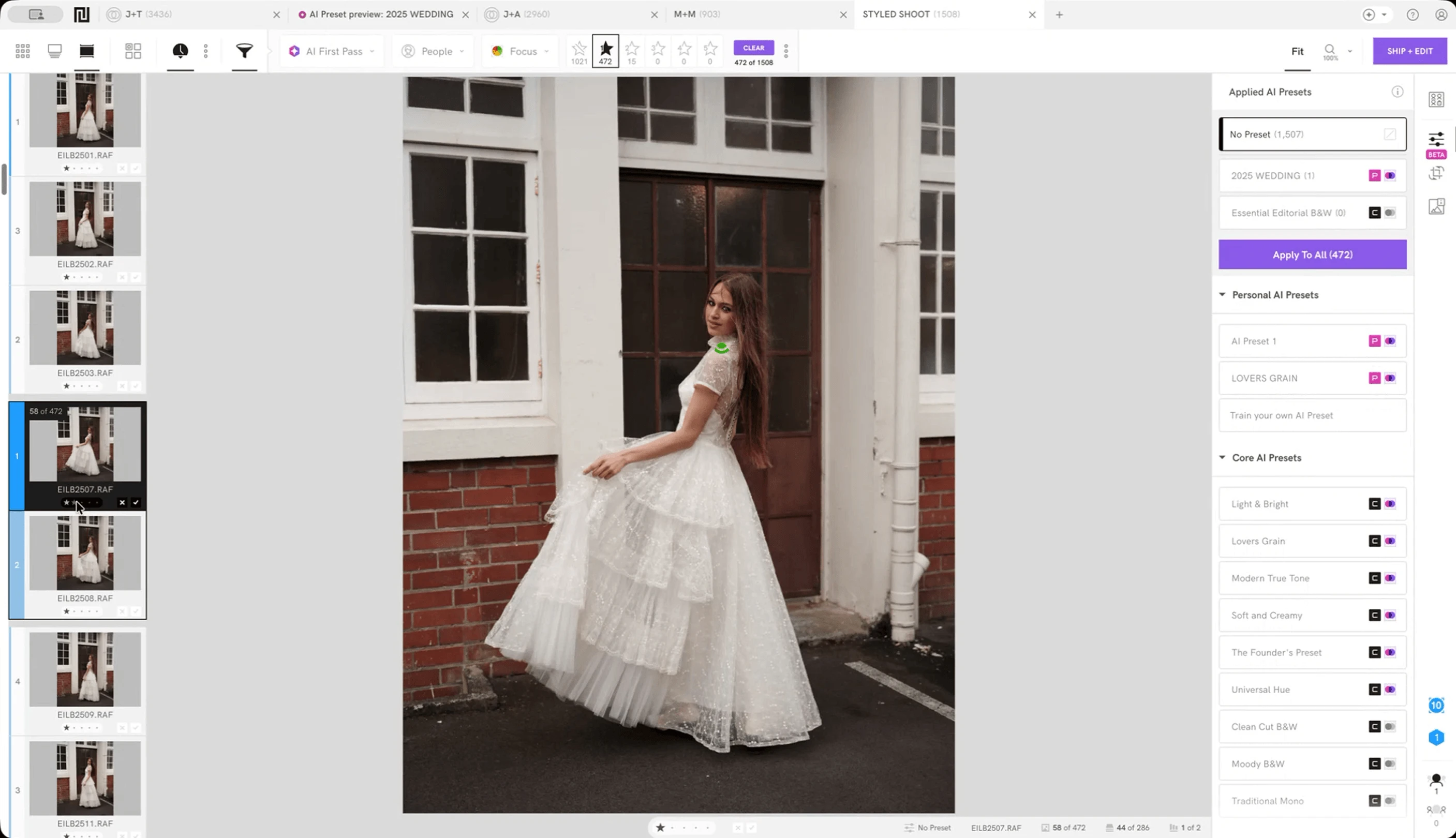
While working through a sports assignment or travel job, you're already moving through frames with value outside the client context — location landscapes, crowd scenes, environmental details. Use a dedicated culling tool like Narrative to rank your shoot into quality tiers, instantly surfacing the strongest frames. Flag secondary candidates as you go — it adds almost no time to a cull you're already doing.
2. Apply a marketplace look at pre-edit.
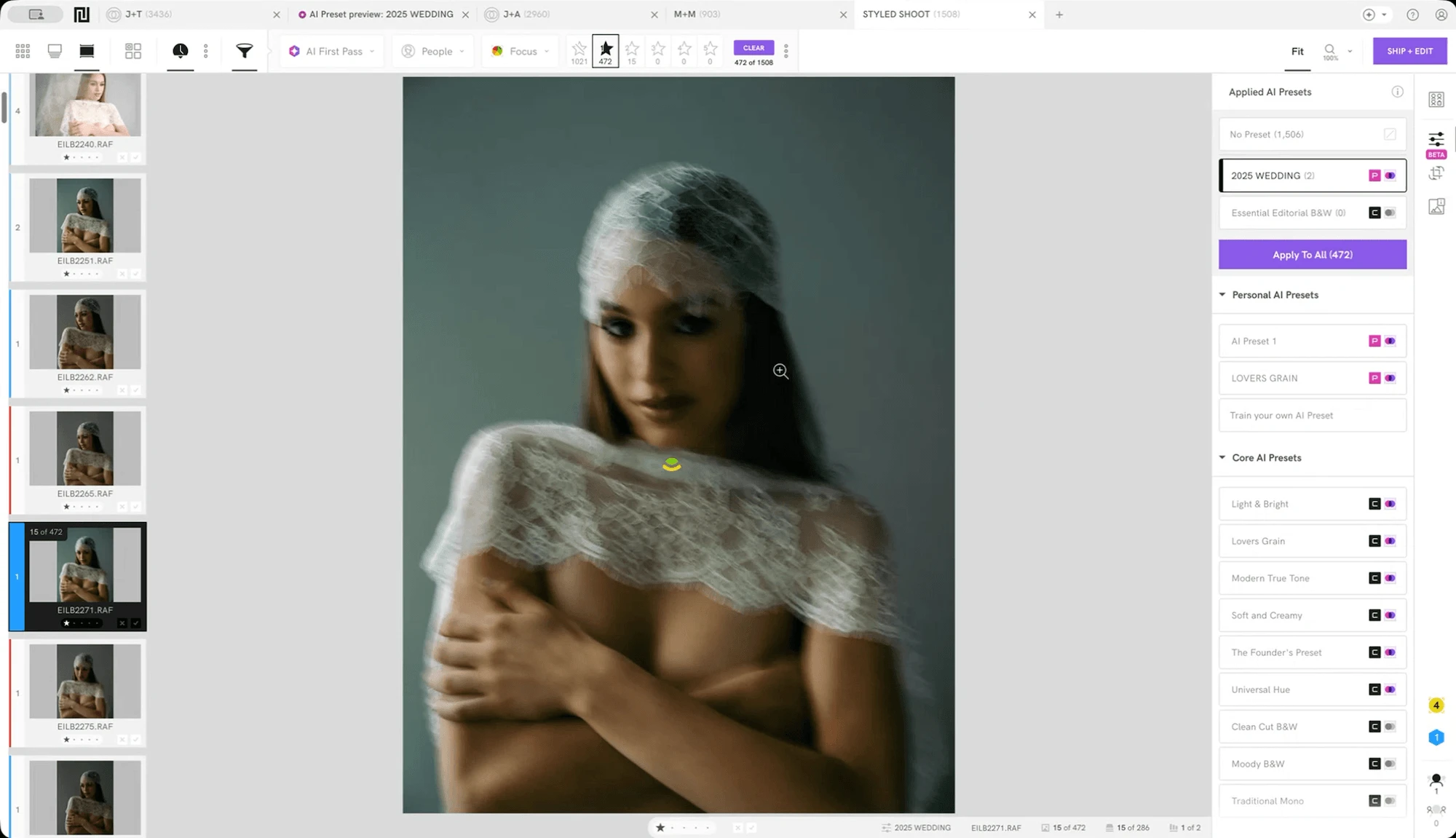
Your assignment editing style may not translate to a stock or print-on-demand context. AI Personal Preset systems that work locally let you apply a distinct, more universal look to flagged images in a single step before exporting to Lightroom, without touching your primary deliverables.
3. Route to a dedicated marketplace folder.
Marketplace candidates export separately from your assignment deliverables. Over time, this becomes active inventory rather than dead archive.
・・・
What Actually Sells: Practical Notes for Travel, Event, and Sports Photographers
Getting images into a marketplace folder is the easy part. Getting them discovered and purchased requires a few deliberate habits.
1. Tag with buyer intent, not subject description.
"Stadium" describes what's in the frame. "Aerial view of packed sports stadium, evening light, no identifiable faces" describes what a buyer is searching for. Metadata written for buyers rather than for personal archiving dramatically improves discoverability over time.
2. Authenticity outperforms studio polish.
The market has moved toward imagery that reads as real — genuine crowd energy, available light, documentary instinct. The aesthetic that defines good travel and event photography is exactly what buyers are looking for. Don't over-edit marketplace work toward a generic look.
3. Know what requires a model release.
For editorial licensing, images of people in public contexts — crowds, sports events, street scenes — generally don't require individual model releases. Commercial licensing is more restrictive. Understanding the distinction before you submit saves rejected uploads and protects you from misuse claims down the line.
4. Consistency of upload beats one-time volume dumps.
Twenty strong, well-tagged images uploaded on a regular cadence will outperform 500 uploaded once. This is only achievable if your culling process is fast enough to make regular uploads realistic.
・・・
Choosing Your Starting Point
For a high-volume travel, event, or sports photographer building a marketplace presence from scratch, a practical sequence:
Start with Adobe Stock if you're already in the Lightroom ecosystem. The direct upload integration is the lowest-friction entry point and the buyer base is large.
Add Alamy for its 40% standard commission, no annual reset, and strong editorial licensing market. It's well suited to the documentary-style work travel and event photographers produce.
Build a direct storefront via Pixieset or Picfair once you have enough curated inventory to make it worth maintaining. This is the highest-margin channel but requires an existing audience to generate meaningful traffic.
With that said, avoid spreading across too many platforms before you've established a curation rhythm. Better to be well-represented on two or three platforms than thinly spread across a dozen.
・・・
The Underlying Economics
Time is the primary constraint, not talent or inventory. Most photographers reading this already have thousands of marketable images — the culling and pre-editing has just never been fast enough to make marketplace curation feel viable alongside assignment work.
Professional workflow speed is ultimately what determines how much of your existing catalogue becomes sellable inventory. The faster the pre-Lightroom phase, the more frames make it out of the hard drive and into a storefront.
Your archive shouldn't be a graveyard. The images are already there. The question is whether your workflow gives you the bandwidth to do something with them.
If workflow speed determines how much of your archive becomes sellable inventory, it's worth examining what's slowing your cull down. Narrative is an AI-powered culling and editing tool built for high-volume photographers — try it free today.
Content