Behind the Build: Sam Roberts on Why Narrative Rebuilds Workflows Instead of Just Speeding Them Up

Wednesday, August 26, 2026
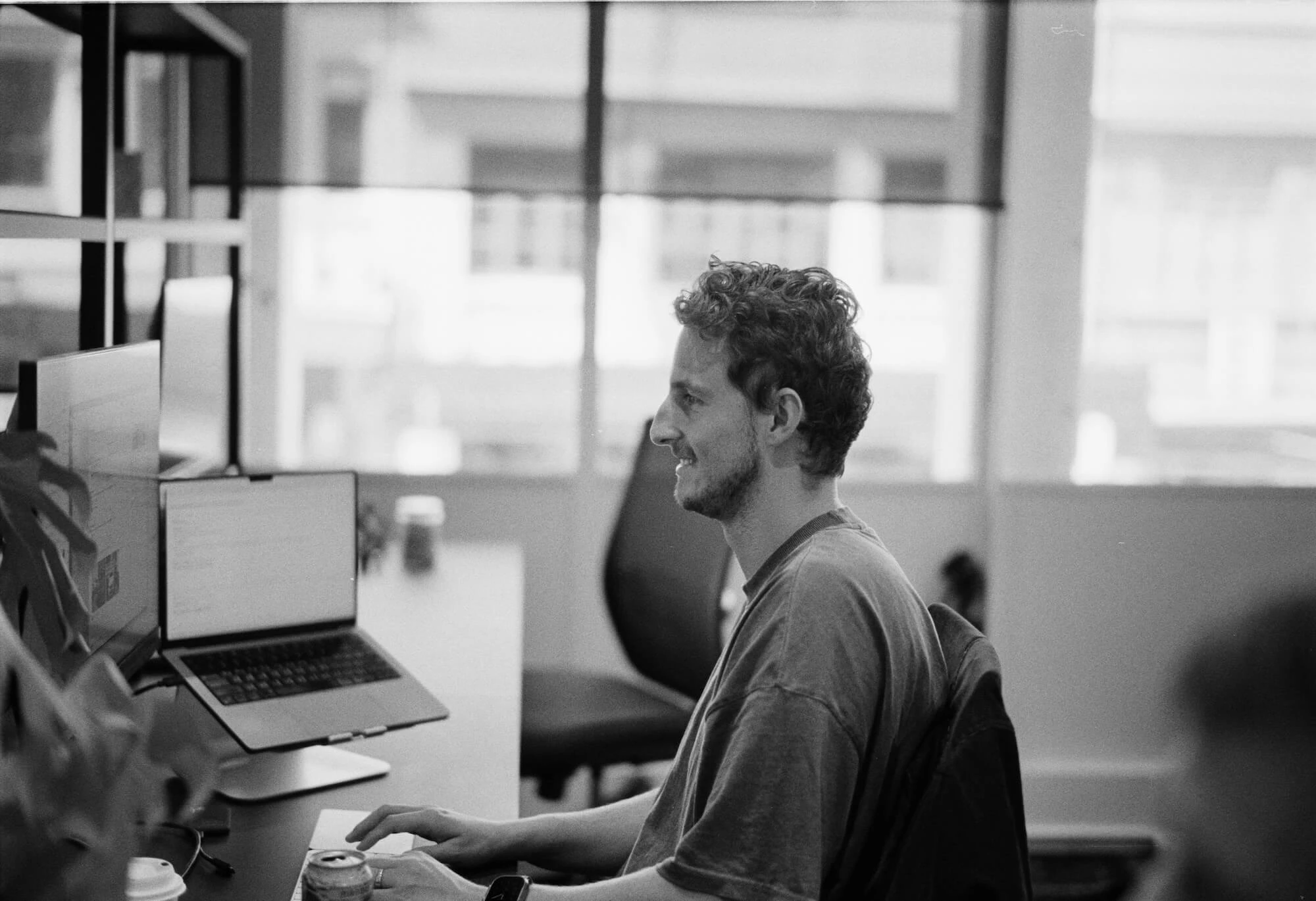
Sam Roberts is Narrative's Head of Product, and one of the earliest people at the company: he started in support and now leads the team deciding what Narrative builds next.
In this interview, part of Narrative's Behind the Build series, Sam explains why the product team optimizes for solving the right problem fast rather than shipping fast, and why making a photographer's existing workflow faster isn't always the same as making it better.
Q: When you think about product at Narrative, do you see it as building features, shaping systems, or redefining how people work entirely?
We think about product as building a cohesive system that solves a greater problem, not isolated features.
When users give us feedback, we don't just take it at face value, we do qualitative and quantitative learning along with our intuition to figure out what the actual underlying problem is. Then we design an opinionated solution that solves that problem at a higher level. This means we end up solving more than just one person's request, and in a way that doesn't lead to a cluttered experience over time.
The product is an evolving ecosystem, and our vision is to eventually encapsulate the entire photographer's workflow. That requires systems thinking to deeply understand user pain and then build tools that address it holistically.
Q: Many products promise efficiency. Narrative talks more about changing how people work. What belief about product sits underneath that, even if it's harder to execute?
Photographers have figured out their own workflows over time using overcomplicated tools and processes, and one way to help is to just make those existing workflows faster. That's not the wrong approach, and we absolutely don't discount speed (it's one of our product pillars!). But within those workflows there are real inefficiencies in how the work is actually done.
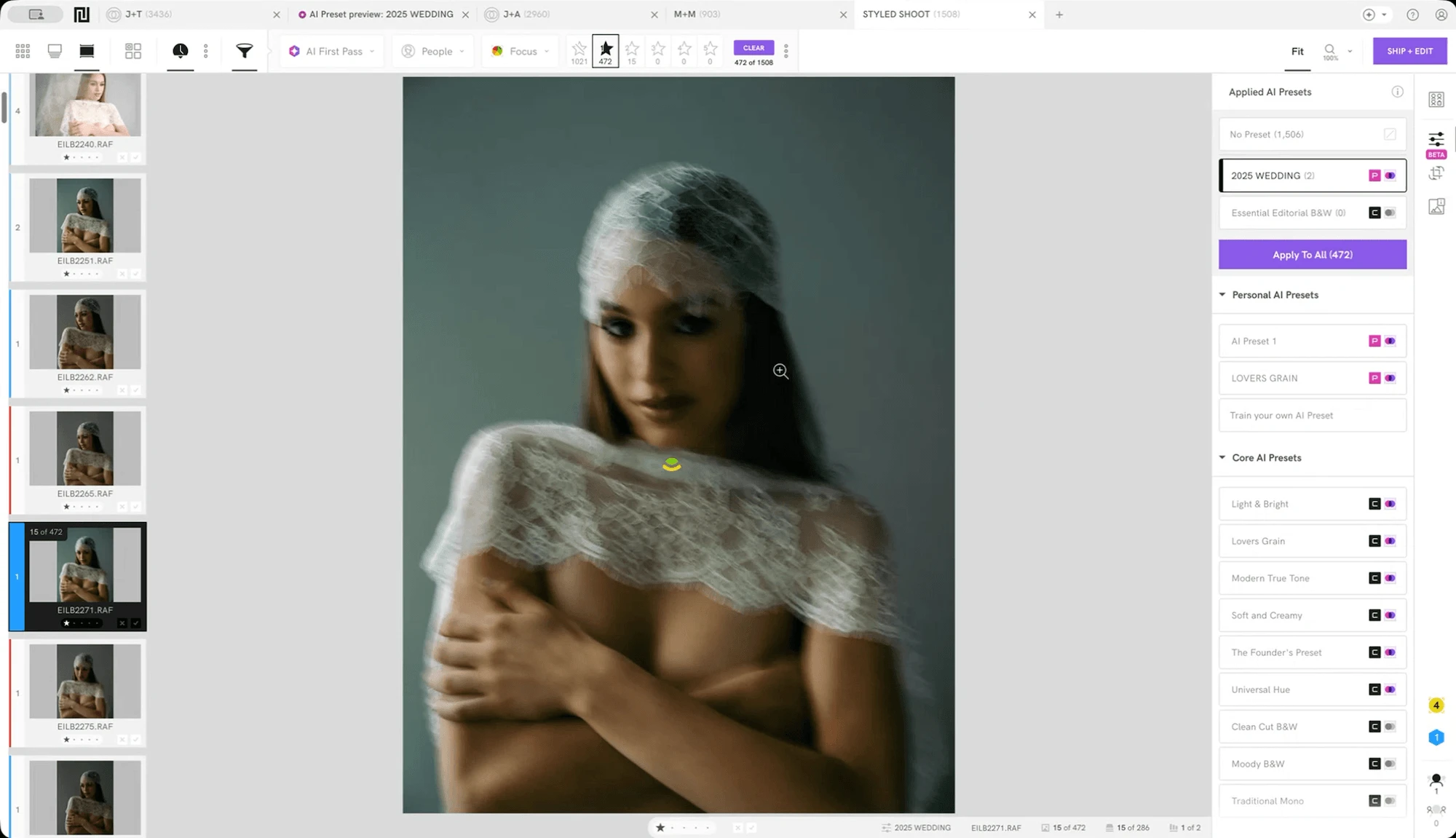
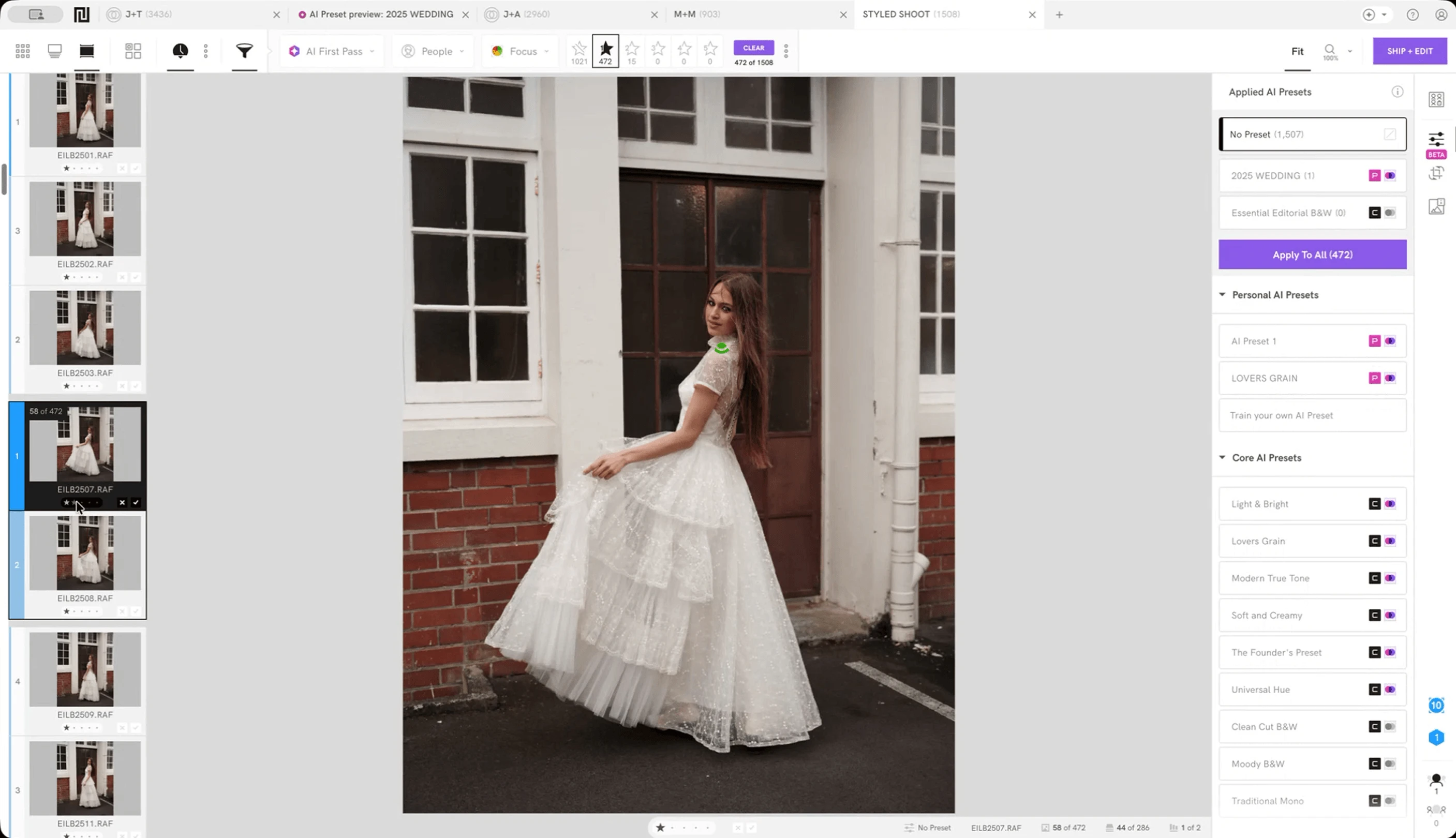
To truly 10x the photographer's workflow, we need to fundamentally change how parts of the workflow exist, not just speed up what's there. For example, historically photographers have done things in a certain order because it was the most efficient approach at the time. But if technology now allows us to, say, handle editing upfront without taking the user's time, then the culling experience becomes better as a result. This change in workflow is likely to be harder to build, but solves the problem much better than just improving the speed of editing itself.
Q: Many teams optimise for shipping quickly. What does Narrative deliberately choose to optimise for instead, even when it's harder?
Velocity is really important to us, but our version of velocity is about impactful progress, not just shipping as much as possible.
There's no point shipping something that doesn't solve the user's problem. So rather than optimising for shipping speed, we optimise for solving problems fast. That means quickly identifying the root problem, validating it with a prototype or in a small way, testing it with users, and then committing to build the right thing.
If we can ship something small that validates the signal, and the problem is big enough, then it's earned the right to have more time spent on it. We optimise for understanding and finding solutions quickly, then committing to building the thing that leads to real impact.

Q: Systems thinking sounds abstract. What's a product decision you've made where looking at the whole ecosystem changed the outcome?
A good example is how we built Edit. We'd heard from user feedback that photographers wanted the tool to be more accessible and easier to use, and our research showed multiple ways to approach this.
It would have been easier for us to build a separate, disconnected tool. But we also found that photographers really wanted the solution to stay within their existing workflow. So we decided to fit into the photographer's current workflow. It took additional time to figure out, but it turned out to be a significant competitive advantage.
If we'd gone the quicker route, adoption would have been a real problem.
Q: When you're building at the edge of new technology, how do you decide what's genuinely valuable versus what's just interesting?
This is a really hard problem because at the edge of technology there is always something interesting to try out. It all comes back to our overall product vision and the real problems our users are facing.
We have a deep understanding of those problems, so we've built quite good intuition about what will actually help versus what's just interesting. But we're also willing to try new and wild ideas. We can quickly prototype, test a hypothesis, and if it doesn't work, that's totally fine. That's not seen as a failure, rather it's learning.
The key discipline is being able to pick something up, test it fast, and be honest when it doesn't actually work.
Q: Product frameworks and best practices are everywhere. What's something you intentionally don't follow because it gets in the way of building the right thing?
We don't follow a rigid roadmap. User research is really important for honing our intuition and understanding what problems to focus on, but if something comes up and it feels right, we're happy to trust our gut and run with it. We're willing to drop anything at any point if priorities shift.
We also don't necessarily follow traditional role boundaries and we're really pushing towards everyone being able to prototype and get involved in anything.
Q: Real user obsession goes beyond feedback loops. What does it actually look like in the way you and the team make decisions?
We try to involve users as much as possible and, to an extent, become the user ourselves.
User obsession for us happens at multiple levels. We want to understand what's actually happening throughout the user's flow, not just what they tell us. We keep users as close to the problems we're solving as possible, talk to them constantly, and run test groups where we do little labs.
We also have the advantage that our CEO is a user himself, which keeps us grounded in the real experience.

Q: As Narrative has grown, how has your role shifted between exploration and alignment?
My role has changed a lot since I started at Narrative. I originally started in support and then found myself running the product team.
Early on, when the team was really small, it was about executing as much as possible and getting maximum impact. Now it's shifted to enabling the team, helping people understand what we're focusing on, why we're doing it, and coaching them in the way we want to build product.
My goal is to get to a point where the team is fully empowered to run and push forward without me blocking anything. That said, I think there's a real need for anyone in product to stay deeply in touch with their users so that is a focus also.
Q: What kind of product thinker tends to thrive here, and what mindset tends to struggle?
People who thrive here enjoy ambiguity, are natural generalists, and are curious. They want to hone their craft, work really hard, and feel real impact. They're good at connecting the dots, seeing what's going well, what's not, and how to make the team flow.
Low ego, willing to grind, highly motivated by impact, focused on users, and focused on learning. People who tend to struggle are those who aren't willing to get into the weeds and learn product from the ground up.
Q: When you look at where Narrative is heading, what excites you most about the product problems still unsolved?
There are so many problems to unpack and solve. In an industry that really needs high innovation, we feel like we're about 5% of the way there in terms of the full workflow we can build towards. It's exciting to be at the leading edge, working on genuinely important problems for photographers, alongside really great people.
There is an interesting blend of figuring out the right UX and experience to actually change how photographers work day to day.
Rebuilding a workflow instead of just speeding it up is harder, and it's the standard Sam holds the product team to.
If that's the kind of product thinking you want to be part of, Narrative's current openings, including Senior AI Engineer and an ongoing Software Engineering Expression of Interest, are listed at narrative.so/careers.