In Focus: Lisa Digiglio on Slowing Down to See What's Already There
CREW The Narrative Newsletter
Tuesday, July 7, 2026
For Lisa Digiglio, an elopement and engagement photographer, the strongest images are almost never the ones she plans for. That belief shaped Frozen Tales, a winter workshop she built in Iceland with a small team: a fashion designer, a videographer, two professional models, a real couple, and makeup artists.
"There was no performance in it," she says of the moment that stayed with her most. "Just a girl fully in her own moment, with Iceland around her doing what it always does."
That instinct, to observe rather than control, has quietly reshaped how she shoots, how she culls, and what she thinks curation actually means.
Frozen Tales: the concept behind the workshop
Frozen Tales started as a simple idea. Bring a small group into Iceland's winter landscapes and focus on slowing everything down.
"Not rushing through shots. Not chasing volume. But really learning how to see," Lisa says. "How to work with weather, light, and emotion in a more intentional way."
Each part of the day was built around atmosphere rather than strict direction. The team worked with changing conditions and cold light, using a minimal approach to directing so everyone on set could focus on presence instead of perfection.
"What stayed with me most was the energy in the group," she says. "Can't wait for the next one."
Why Iceland doesn't let you control everything
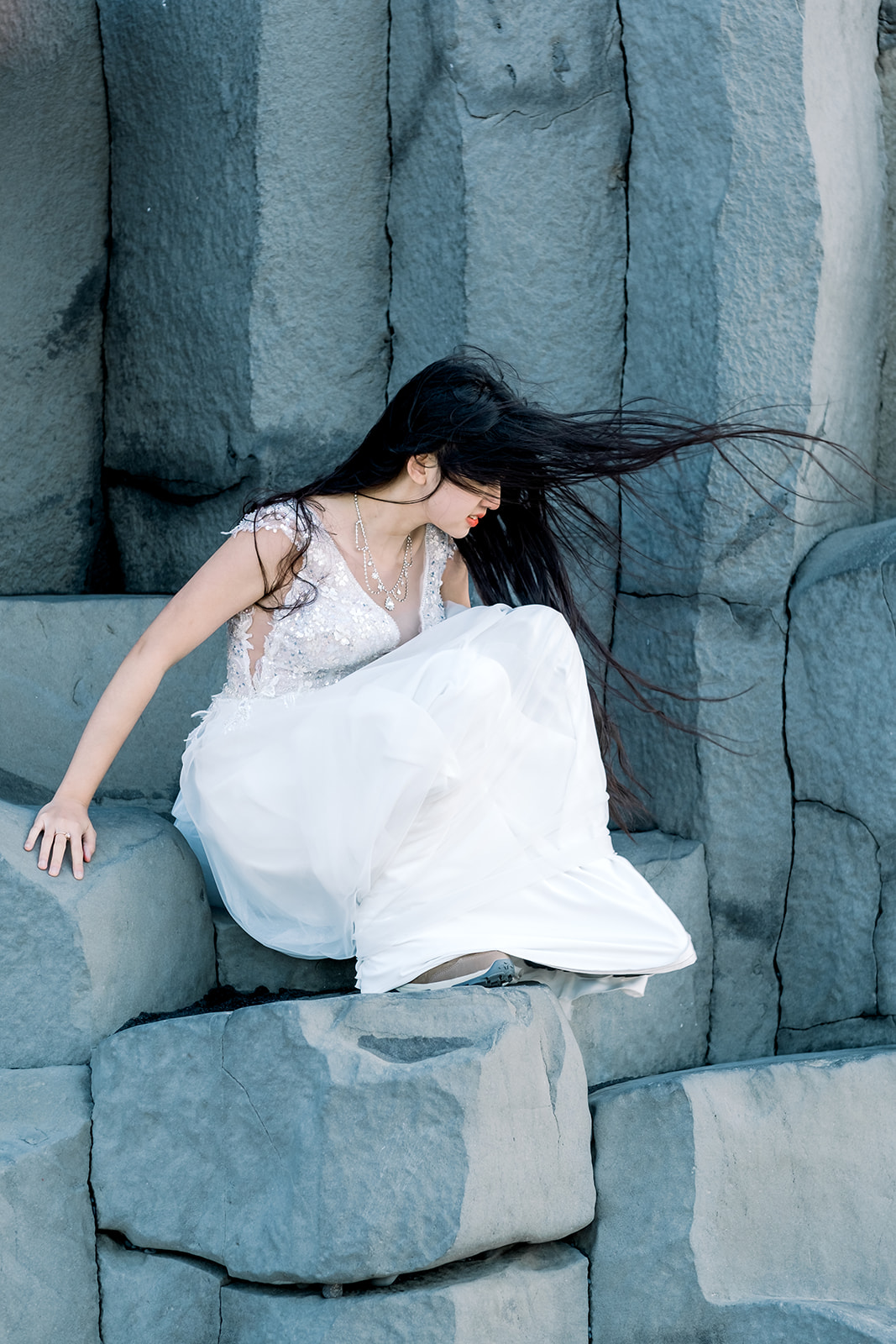
Lisa is clear that the location did a lot of the work. "The weather, the landscapes, the unpredictability of nature. It pulls people out of autopilot," she says. "There's something very grounding about being surrounded by such raw beauty."
She's come to see that as a feature, not an obstacle. "I think Iceland played a big role in that shift. The environment here doesn't really allow you to control everything. It forces you to adapt. Over time, that taught me to trust the process more and to work with what is happening rather than against it."
The shot nobody planned for
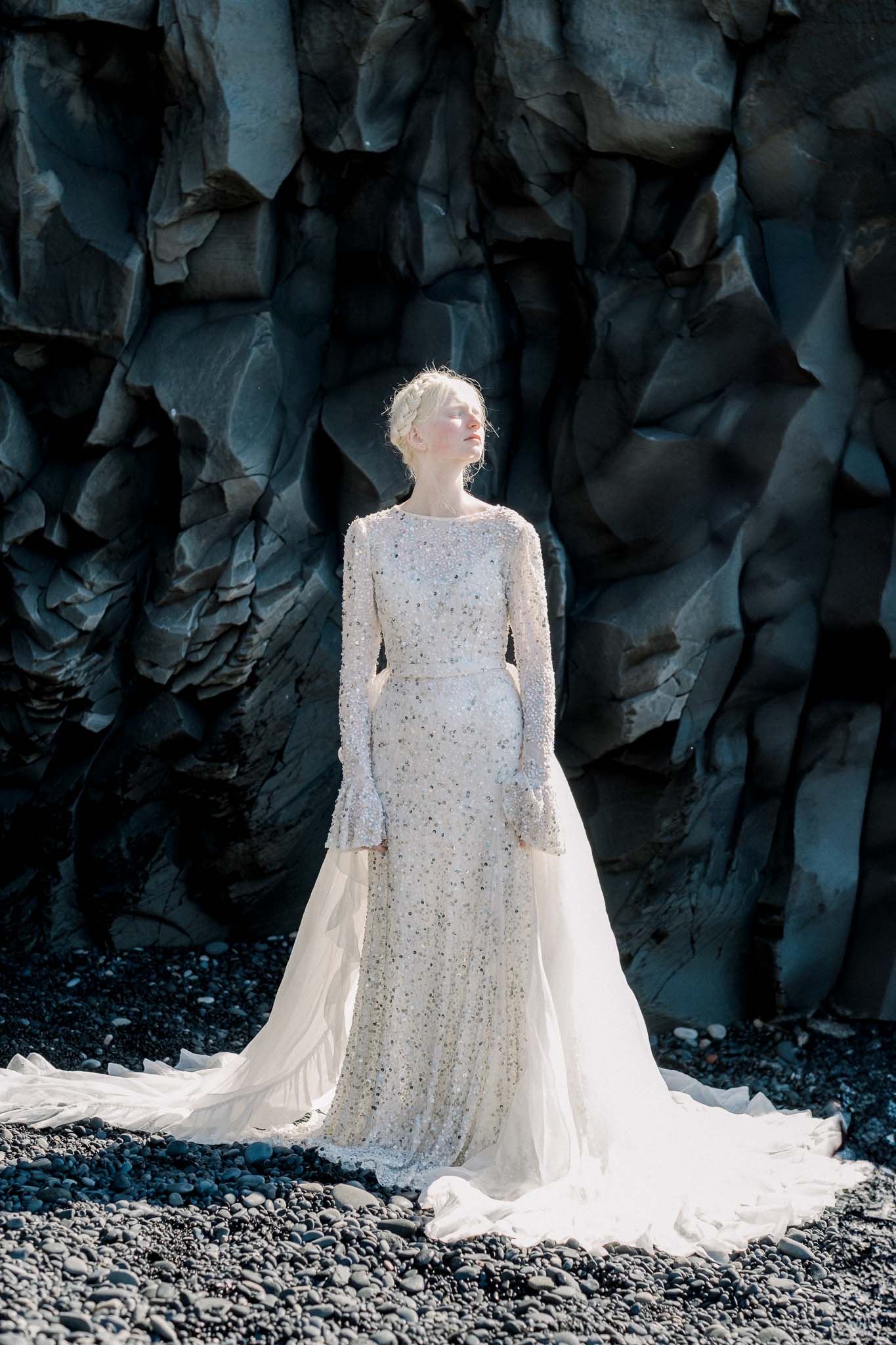
The image Lisa keeps coming back to from Frozen Tales wasn't staged at all. The light was already fading, everyone was cold and a little tired, and the team was simply moving between locations with the model.
"Nothing was being directed at that point," she says. "We were simply walking and reacting to the landscape."
Then the model stopped. No instruction, no cue.
"It was extremely simple, almost nothing on the surface," Lisa says. "But that's exactly what made it work. There was no performance in it. No awareness of the camera. Just a girl fully in her own moment, with Iceland around her doing what it always does."
"That image stayed with me because it reminded me again that the strongest moments are never the ones we plan," she says. "They happen when people feel safe enough to stop thinking and just be."
How her style shifted from directing to observing
Lisa describes an earlier version of herself who believed more was better: more direction, more variety, more control over the frame.
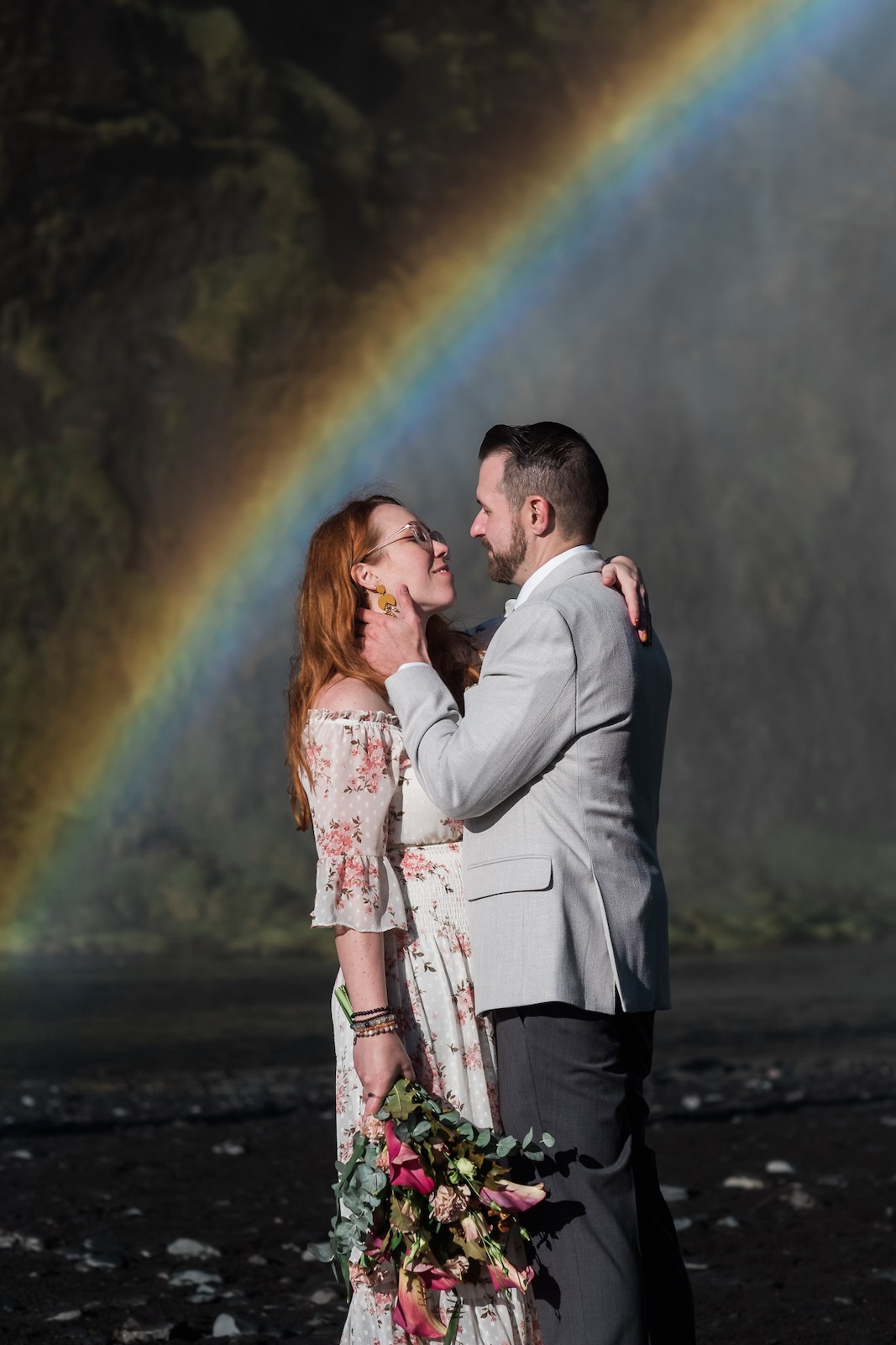
"I was focused on creating something 'perfect' in a technical sense," she says. "But over time, I realized that the images I connected with most were never the most staged ones. They were the quiet, unplanned moments in between."
Now her approach has flipped. "I do less. I observe more. I leave space in the experience so things can actually unfold," she says. "I've also become more comfortable with imperfection. Weather shifts, unexpected light, or moments that feel unresolved often end up being the strongest parts of a story."
What curation means when nothing is staged
For Lisa, curation isn't about picking the sharpest or most technically correct frame. It's about restraint.
"It's not about showing everything that happened," she says. "It's about understanding what actually matters in the story and removing anything that distracts from it. A good gallery doesn't feel heavy or repetitive. It feels intentional. Every image has a reason to be there."
She also treats curation as something that starts on location, not just at the desk. "Curation also happens in real time. It starts when I shoot, not just when I edit," she says. "For me, curation is what turns a collection of photos into something that feels like a memory."
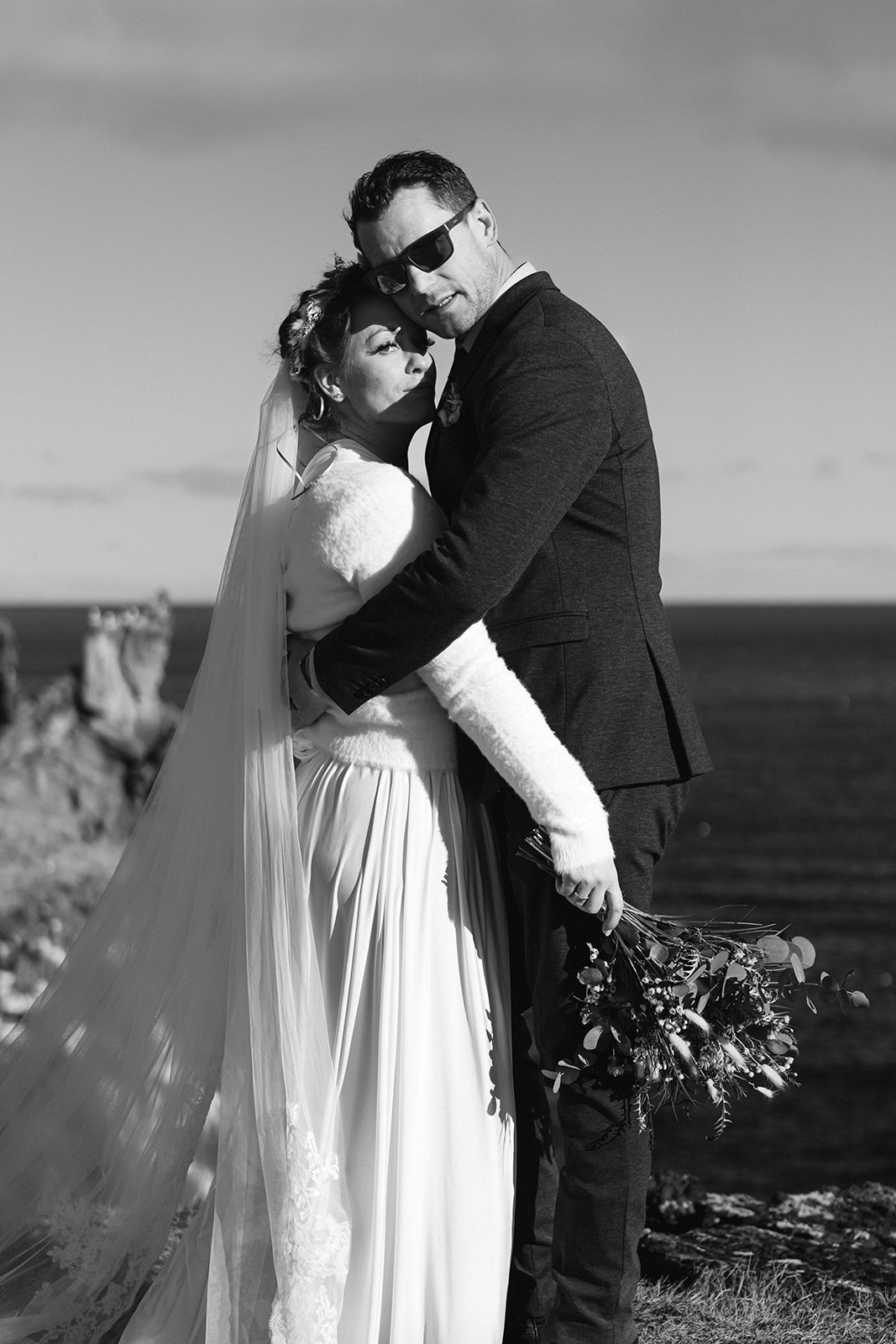
Her workflow, from first pass to final gallery
A full elopement day typically brings Lisa home with 1,000 to 2,000 images, more on multi-day or collaborative projects like Frozen Tales. "I've learned that volume is not the real challenge," she says. "The challenge is staying clear in what you keep."
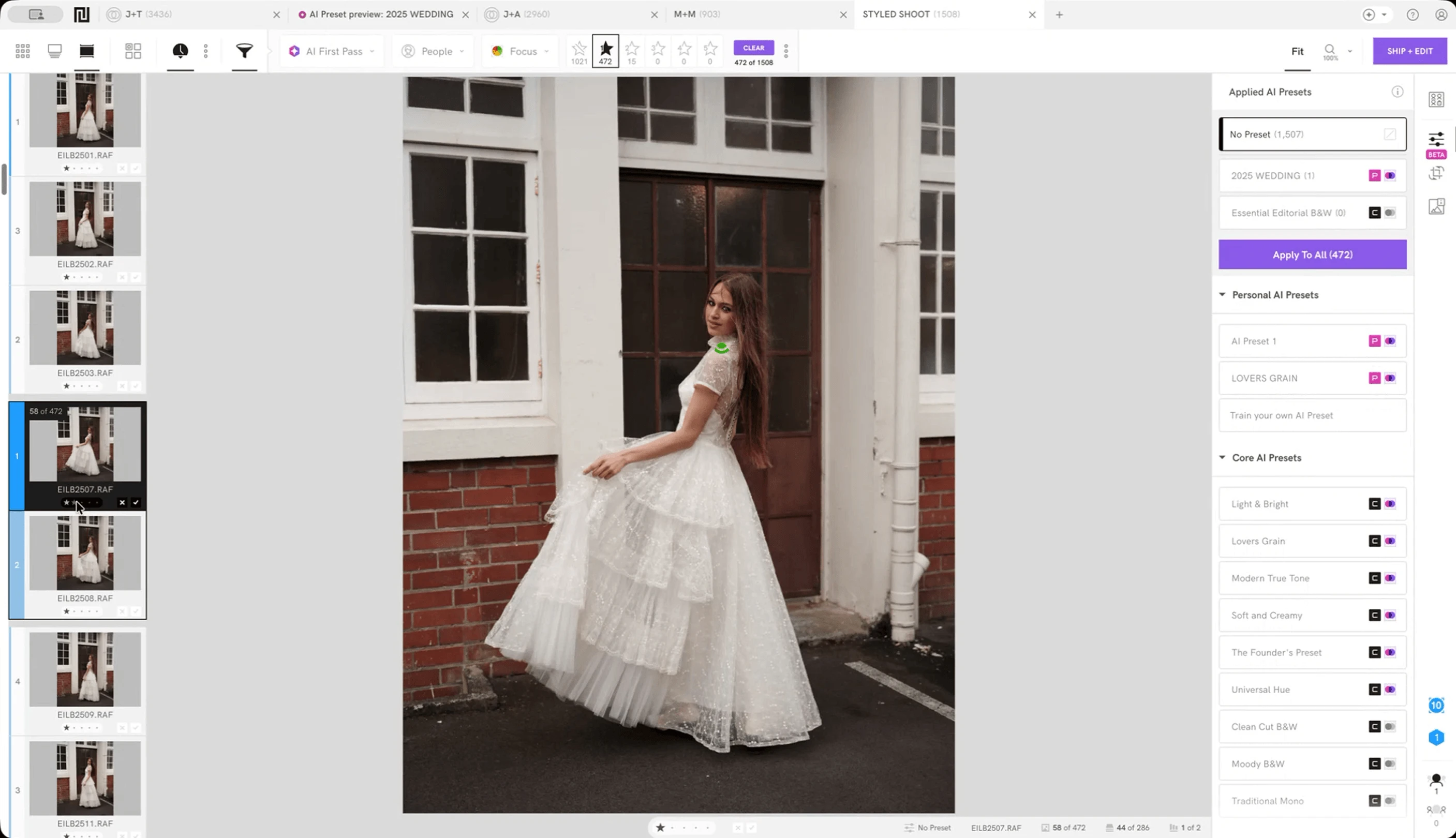
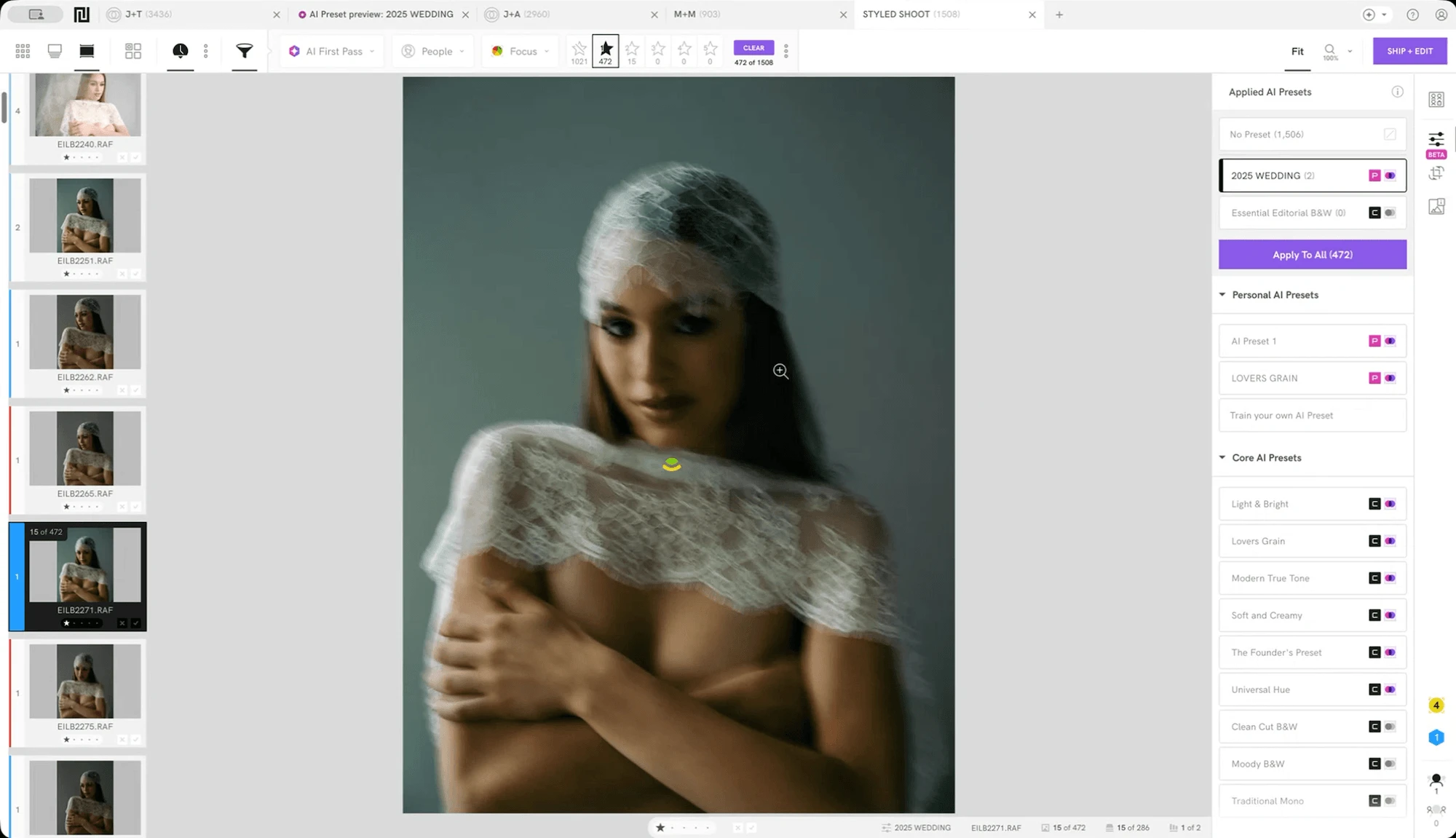
Her post-production starts with an initial pass in Narrative to narrow everything down to the strongest frames. "I don't look for perfection at this stage. I look for emotion, timing, and storytelling flow," she says. "Narrative helps me stay fast without losing that sensitivity."
She doesn't only use it as a culling tool. "I also use Narrative as a way to 'read' a shoot before I start editing," she says. "I look at how moments cluster, where the energy rises, where it slows down, and what emotional thread naturally appears. It helps me avoid forcing a structure onto the gallery that doesn't belong there."
Only after that does she move into a final, one-by-one pass, refining each image so the whole set feels consistent and true to the story. "I don't aim for quantity. I aim for coherence and feeling," she says.
What's changed most since bringing Narrative into that process isn't her taste. It's her energy. "I spend less time stuck in the overwhelming middle phase of sorting through everything," she says. "I get to the creative part of editing sooner, and I stay more consistent in how I approach each gallery."
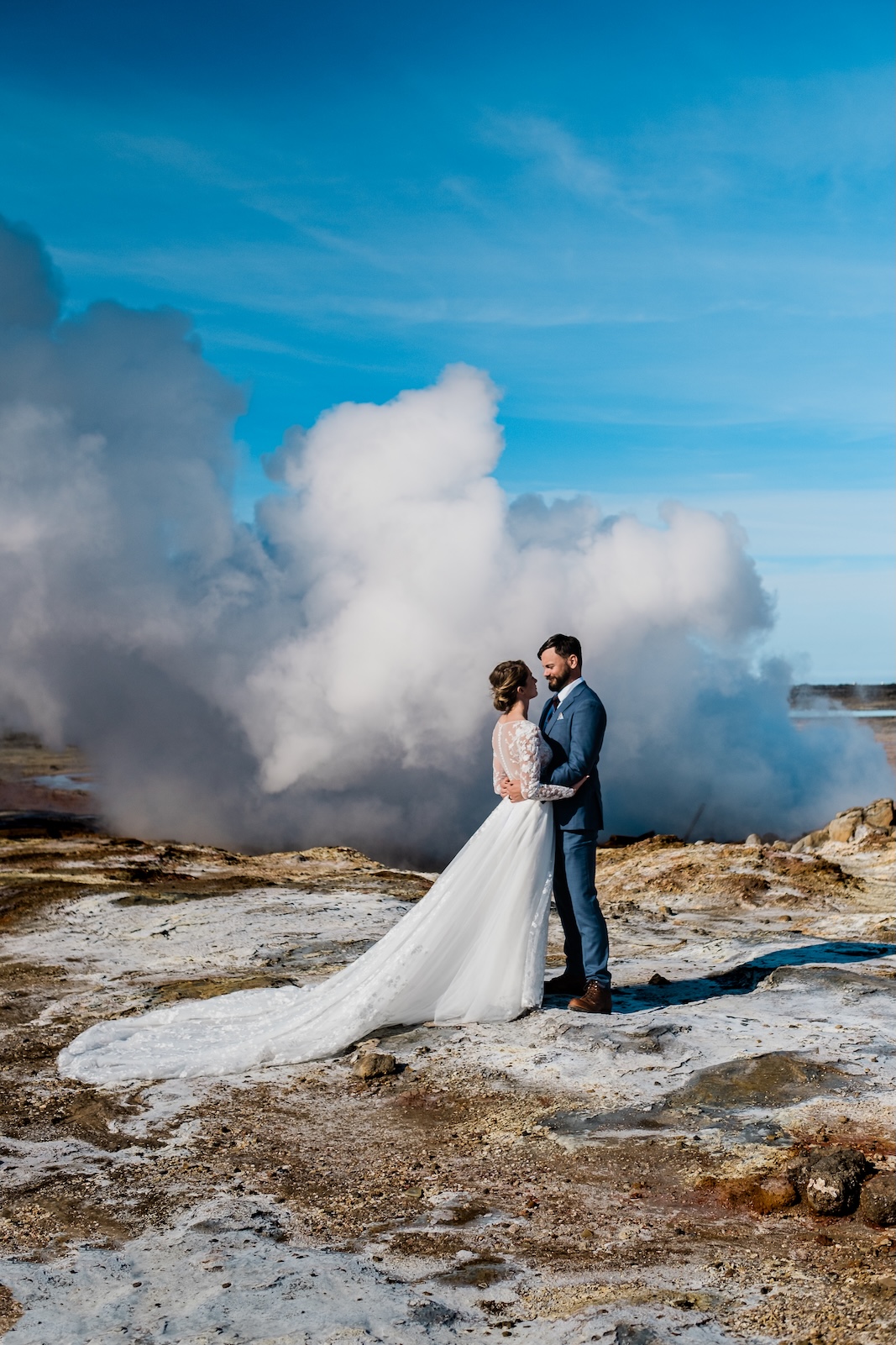
Lisa Digiglio is an elopement and engagement photographer known for cinematic, documentary-style work built around restraint over direction. She created Frozen Tales, a collaborative winter photography workshop in Iceland. Find her on Instagram @lisadigiglio or at lisadigiglio.com.
💜 Ready to cull with more clarity and less fatigue? Try Narrative free.
The Narrative Newsletter