Bookkeeping and Taxes for Photographers: A Beginner's Guide

Elli Kim Content
Monday, September 21, 2026
Every January, a familiar scene plays out in home offices everywhere: a photographer empties a shoebox, a desk drawer, or a folder of forwarded email receipts onto the table and tries to reconstruct twelve months of business expenses from memory. A gas receipt from a shoot in March. A software subscription that renewed in July and got forgotten. A new lens, receipt still sitting in the box it shipped in back in October. Three hours in, the pile is barely half sorted, and the filing deadline is eleven weeks away.
Photography is a business, and most of what it costs to run one is deductible: gear, editing and culling software, mileage to shoots, even part of a home studio. What separates a frantic tax season from a routine one isn't a sharper memory every January. It's tracking expenses as they happen, all year, and paying estimated taxes on a schedule instead of catching up at the deadline.
This article explains general bookkeeping and tax concepts for photographers in plain language. It is general education, not tax advice. For a filing decision specific to your business, talk to a CPA.
In This Article
What Counts as a Deductible Business Expense for Photographers?
How Does the Mileage Deduction Work for Photographers?
Can You Deduct a Home Studio or Home Office?
How Do Quarterly Estimated Taxes Work for Self-Employed Photographers?
What Bookkeeping Habits Actually Make Tax Season Painless?
How Does Tracking Expenses Change the Way You Price Your Work?
What Counts as a Deductible Business Expense for Photographers?
The IRS test for a deductible business expense is whether it's "ordinary and necessary" for your trade, and the IRS is direct about the flip side of that rule too: "you wouldn't write off personal expenses as business expenses because they're not ordinary and necessary costs of carrying on your trade or business." For a working photographer, that covers more ground than most people assume when they first start tracking.
The core categories most high-volume photographers can deduct:
Camera bodies, lenses, and accessories.
Larger equipment purchases often qualify for a full deduction in the year they're bought and ready to use, rather than being spread out over several years. Under Section 179, a business can deduct the full cost of qualifying equipment in the year it's "placed in service." The dollar limit on that deduction changes annually, so confirm the current figure with a CPA before assuming a specific purchase qualifies in full.
Lighting, backdrops, and props.
Computers, hard drives, and backup storage.
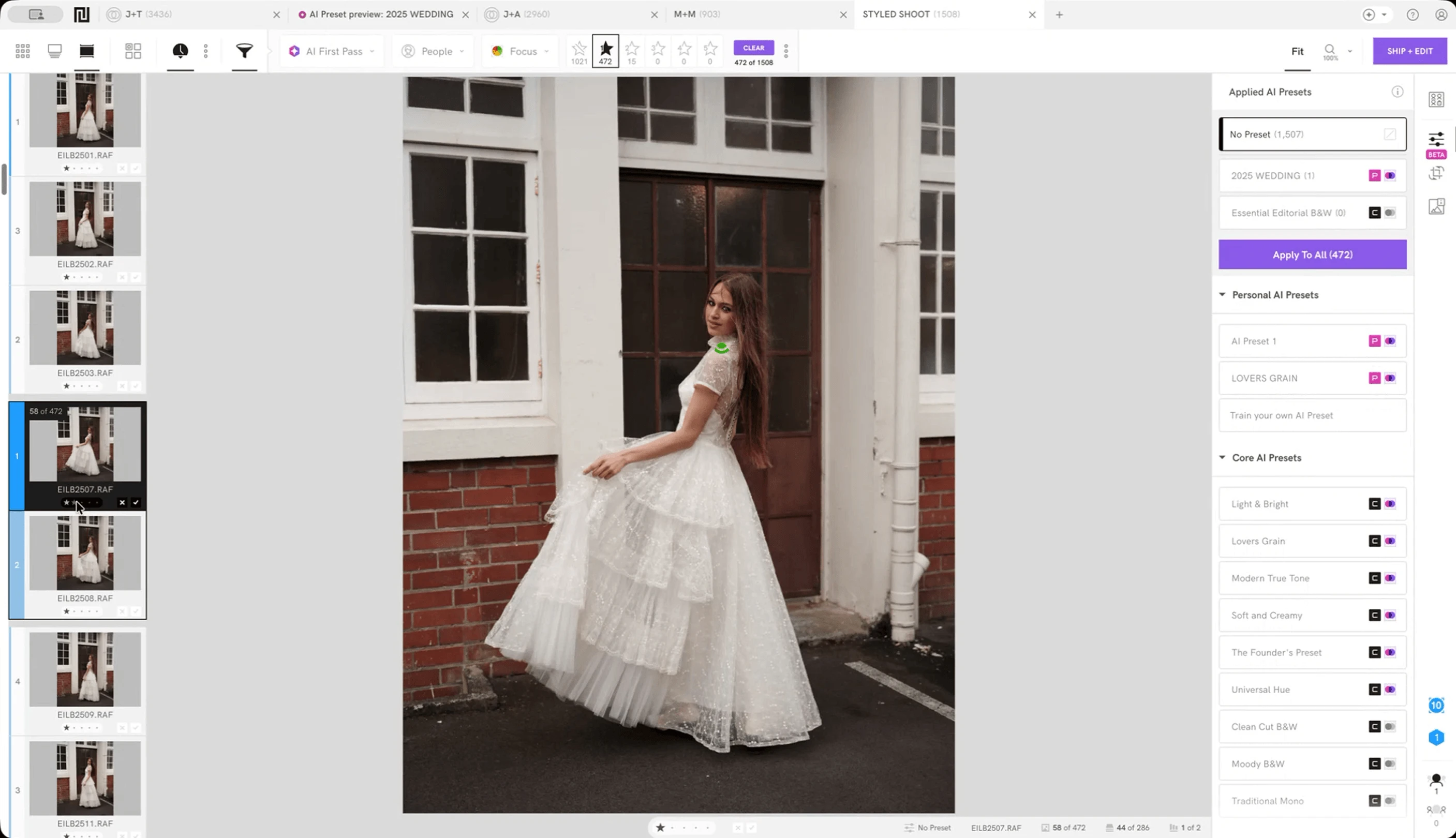
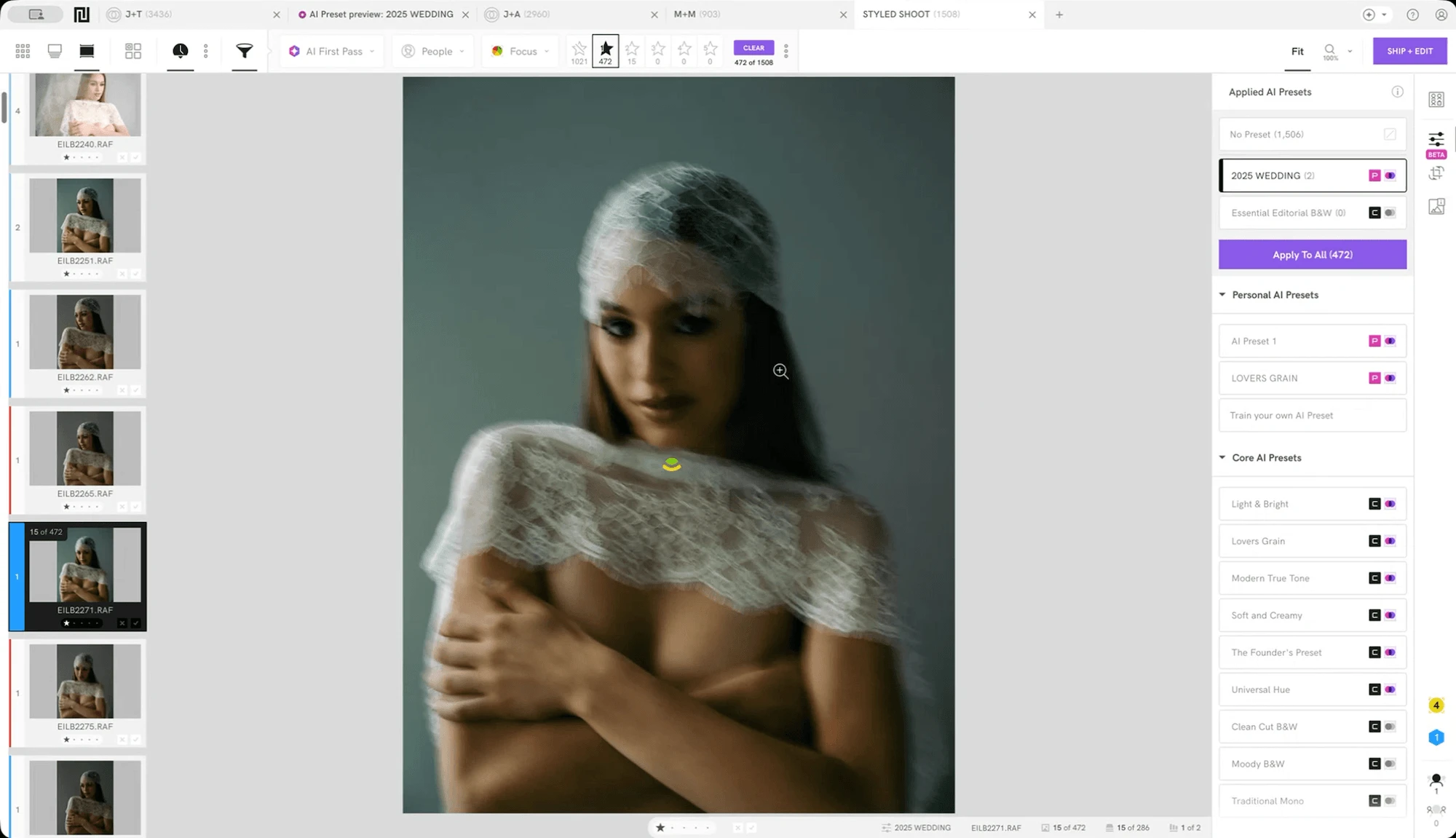
Editing and culling software subscriptions. This includes Lightroom and Creative Cloud, client gallery and studio management tools, and AI-assisted culling software such as Narrative, which is itself a deductible business tool the same way any other software subscription is.
Business insurance, continuing education, and marketing.
If something is used for both business and personal life, a laptop split evenly between editing client work and personal use, say, only the business-use portion is deductible. The personal share doesn't count, and the IRS expects that split to be reasonable and documented.
How Does the Mileage Deduction Work for Photographers?
Driving to a shoot, a client consultation, a location scout, or a supply run for the business is generally deductible mileage. A regular commute to a fixed outside workspace isn't, but for most high-volume photographers, nearly every business mile driven is shoot-related rather than commute-related.
The 2026 rate isn't a single number. The IRS set the standard business mileage rate at 72.5 cents per mile for miles driven January 1 through June 30, 2026. Citing rising fuel costs, the IRS then raised it to 76 cents per mile for miles driven July 1 through December 31, 2026, a mid-year change that's uncommon but not unprecedented (IRS Bulletin 2026-29, Announcement 2026-11). The rate is reviewed regularly based on the fixed and variable costs of operating a vehicle, so check the current figure before filing rather than assuming a single rate held for the whole year.
That split makes dated mileage records more than a good habit for 2026, it's what separates miles that get logged at 72.5 cents from miles that get logged at 76 cents. A simple log with the date, destination, and business purpose of each trip, kept as you go rather than reconstructed later, is what actually survives if the IRS asks for it, and it's the only way to apply each half-year's rate to the right miles.
Can You Deduct a Home Studio or Home Office?
If part of a home is used regularly and exclusively for business, editing, client calls, storage, a small studio setup, it can qualify for a home office deduction. The simplest route is the simplified option the IRS offers: a standard deduction of $5 per square foot of home used for business, up to 300 square feet, for a maximum deduction of $1,500 a year. That deduction can't exceed the gross income generated from the business use of the home, and it comes with a trade-off: mortgage interest and property taxes still get claimed in full elsewhere on the return, and there's no separate depreciation deduction to track.
A regular method exists too, based on the actual percentage of the home used for business and the real costs of maintaining it, which can produce a larger deduction for a bigger dedicated space but requires more detailed recordkeeping. Running the numbers both ways, or having a CPA do it, is the only way to know which method actually nets more for a specific space.
How Do Quarterly Estimated Taxes Work for Self-Employed Photographers?
Once net self-employment earnings hit $400, the IRS requires a return, full stop: "You have to file an income tax return if your net earnings from self-employment were $400 or more." Above that threshold, self-employment tax applies on top of regular income tax. That rate is 15.3 percent of net self-employment earnings, split between 12.4 percent for Social Security and 2.9 percent for Medicare.
Because that tax isn't withheld from client payments the way it would be from a paycheck, the IRS expects self-employed photographers to pay it in four installments across the year rather than as one lump sum at filing time. According to the IRS, the payment periods and their due dates are:
Income earned January 1 through March 31: due April 15
Income earned April 1 through May 31: due June 15
Income earned June 1 through August 31: due September 15
Income earned September 1 through December 31: due January 15 of the following year
If any due date lands on a weekend or legal holiday, the payment is on time if made the next business day. Generally, estimated payments are required if a photographer expects to owe at least $1,000 in tax for the year after withholding and credits, and their withholding falls short of the smaller of 90 percent of the current year's tax or 100 percent of the prior year's tax.
That even four-way split assumes income that arrives evenly across the year, which rarely describes a wedding or event-heavy photography business. If most of the year's income lands in a five- or six-month stretch, planning cash flow around that unevenness matters just as much as getting the tax math right, since the two problems share the same root cause: money that arrives in a few large chunks has to cover bills, including tax bills, that don't wait for the next booking.
What Bookkeeping Habits Actually Make Tax Season Painless?
None of this requires elaborate systems. It requires a few habits repeated consistently across the year instead of a single, frantic pass in January.
Keep business and personal money separate, ideally in their own bank account and card from the day the business starts accepting payment. This matters for clean recordkeeping regardless of how the business is structured, and it's the single change that does the most to make every other habit on this list easier.
Log each expense within a few days of the purchase, not at the end of the month or the end of the year. A receipt photographed and categorized the day it's earned takes thirty seconds. The same receipt reconstructed from memory in January can take much longer, if it can be reconstructed at all.
Save receipts digitally as they come in. A phone photo filed into a folder by month beats a growing pile of paper that has to be sorted all at once later.
Reconcile against bank and card statements monthly, not annually. Monthly reconciliation catches a missed expense or a duplicate charge while it's still easy to trace. A yearly reconciliation means finding a single unexplained line item somewhere in twelve months of transactions.
Set aside a fixed percentage of every client payment for taxes the day it lands, before it has a chance to look like spendable income. Building that habit around the 15.3 percent self-employment tax rate, plus whatever regular income tax bracket applies, keeps the quarterly due dates above from ever being a surprise.
How Does Tracking Expenses Change the Way You Price Your Work?
There's a second payoff to tracking expenses well beyond making tax season easier: it's also the exact data needed to price photography work accurately. A photography business's Cost of Doing Business, sometimes shortened to CODB, is the total amount it actually needs to bring in every year to cover every expense on the list above and still pay the photographer a living income. It's the floor underneath every rate decision, and it's only ever as accurate as the expense records behind it.
A photographer who has been logging gear, software, mileage, and home office costs all year already has the real number. A photographer reconstructing it from memory in January is guessing, and a guess that's off by a few thousand dollars a year can mean pricing sessions or weddings below what the business actually costs to run. For the full walkthrough of turning that number into an actual rate, see how to price photography work.
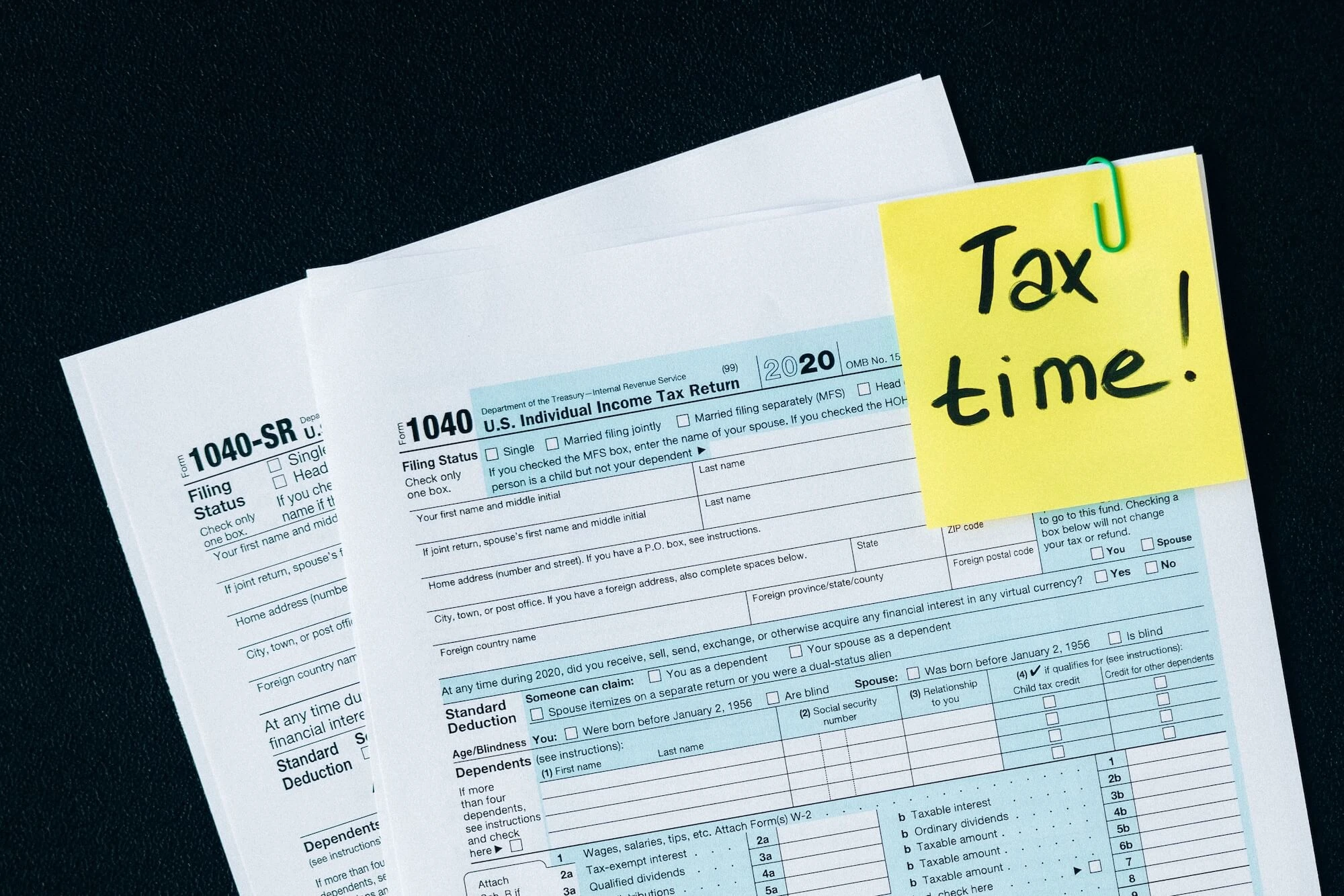
Cover photo by Nataliya Vaitkevich
Content