Surviving Your Slow Season: Cash Flow Planning Between Bookings

Elli Kim Content
Tuesday, September 22, 2026
A destination wedding photographer might book eight or ten weddings a year, each one paid in two or three irregular installments that land somewhere between May and October. Then the calendar empties out. Inquiries slow to a trickle until spring, but rent, gear payments, and software subscriptions don't take the winter off.
That gap is a cash flow problem, not a marketing problem, and it gets solved months before the slow season starts, not during it. The short version: set aside a fixed portion of every peak-season payment the day it lands, time equipment and software purchases for when they're both tax-deductible and actually affordable, and use the quiet months for the bookkeeping and admin work peak season never leaves room for.
This article explains general cash flow and tax-timing concepts in plain language. It is general education, not tax or financial advice. For guidance specific to your business, talk to a CPA.
In this article
Why is a slow season a cash flow problem, not a marketing one?
How much should you set aside from every peak-season payment?
When should you buy new gear?
What should you actually do during the slow months?
Why Is a Slow Season a Cash Flow Problem, Not a Marketing One?
The instinct when bookings dry up is to market harder: post more, run a promotion, chase every cold inquiry. That treats the slow season as a demand problem. For most high-volume photographers, it isn't. The demand was never evenly distributed to begin with.
According to The Knot, peak wedding season runs May through October, and 76 percent of weddings happen in that stretch, leaving only 24 percent spread across the other six months. October and June are tied as the most popular months at 16 percent each, and fall alone (September through November) accounts for 35 percent of weddings booked in a year. A destination wedding photographer's income mirrors that curve almost exactly: a handful of large payments concentrated in half the year, then very little for the other half.
Family and brand photographers see a gentler version of the same pattern, clustered around back-to-school sessions, the holiday card rush, or a client's product launch calendar rather than wedding dates specifically. The shape is the same either way: income that arrives in a few large, irregular chunks has to be deliberately spread across twelve months of expenses that don't wait for the next booking. That's a budgeting problem, and it has a budgeting solution.
How Much Should You Set Aside From Every Peak-Season Payment?
Every payment from a peak-season client already has two future bills attached to it that haven't come due yet: taxes, and the months when there's no payment coming in at all. Treating the full amount as spendable income is what turns a good season into a rough winter.
Start with the tax side, because it's the most concrete number available.
According to the IRS, self-employment tax is 15.3 percent, but that rate doesn't apply to the full net profit. Per Topic 554, the IRS first counts only 92.35 percent of net earnings as taxable, then applies the 15.3 percent rate to that reduced number, which works out to roughly 14.1 percent of actual net profit rather than 15.3 percent. That's before regular income tax, which is added on top at whatever bracket applies to the photographer's total income.
There's no single correct percentage to set aside that fits every photographer, since the right number depends on total income, filing status, and state taxes, but that self-employment tax is the floor everyone pays, and it's worth calculating the fuller number using the Form 1040-ES worksheet the IRS provides for estimating quarterly tax.
That worksheet matters for a second reason: timing. The IRS generally expects self-employed taxpayers to pay estimated tax in four equal installments through the year, and to avoid an underpayment penalty, Topic 306 requires paying in at least 90 percent of the current year's tax or 100 percent of the prior year's tax, whichever is smaller.
Four equal payments make sense for income that arrives evenly. It doesn't fit a photographer whose income actually landed in May, July, and October. For that situation, the IRS allows the annualized installment method, which matches each estimated payment to income actually earned in that period instead of forcing an even split. It's the more accurate option when most of the year's income lands in a five-month window, and it avoids overpaying early in the year on money that hasn't arrived yet.
The practical habit underneath both of these numbers is the same: move a set percentage of every incoming payment to a separate account the day it clears, before it has a chance to look like spendable income. What's left in that account by December is what actually gets a photographer through the slow season, tax bill included.
When Should You Buy New Gear? Timing Purchases Around the Slow Season
The slow season is also, not coincidentally, the best time to buy the camera body, lens, or computer that's been on the list all year. Two things line up: there's cash on hand from the season that just ended, and there's actual time to research the purchase instead of grabbing whatever's in stock the week before a shoot.
There's a tax reason to time it deliberately, too. Under Section 179, a business can deduct the full cost of qualifying equipment, cameras, lenses, and computers included, in the year it's "placed in service," rather than depreciating that cost over several years. The IRS defines placed in service as the point the equipment is ready and available for its intended business use, whether or not it's actually been used yet. That means a lens bought and unboxed in December counts toward that year's deduction, while the same purchase made in January doesn't help until the following year's return.
One limit worth knowing before planning around this: Section 179 can't reduce business income below zero. In a genuinely slow year with little or no net profit, the deduction is capped at whatever profit is left, and the unused portion carries forward to next year rather than disappearing. Bonus depreciation and regular depreciation schedules don't carry that same income cap, and are the fallback in a year Section 179 can't fully apply.
The caution here matters as much as the benefit: buy equipment because the business needs it, not because a deduction makes it feel free. A deduction lowers the cost of a purchase that was already worth making. It doesn't turn an unnecessary one into a good idea.
What Should You Actually Do During the Slow Months?
The slow season isn't empty time, it's the only time most high-volume photographers get to work on the business instead of just in it. Three things belong on that list before spring bookings start again.
The first is the bookkeeping that peak season never leaves room for: reconciling accounts, categorizing the year's expenses, and getting receipts organized before tax season turns it into a scramble. Bookkeeping and Taxes for Photographers covers the habits that make this manageable year-round rather than a January fire drill.
The second is reviewing the foundational pieces of the business itself: contract language, pricing, whether a separate business bank account and the right legal structure are actually in place. For photographers still working out of one shared personal account or without a clear entity structure, How to Actually Start Your Photography Business covers the setup this all depends on.
The third is a longer-term question worth asking once the current season's cash flow is actually under control: whether the slow season itself is a signal to build a second income stream rather than just budget around the gap. That's a different problem from the one this article covers, and 4 Proven Ways to Diversify Your Photography Income is the better read for it.
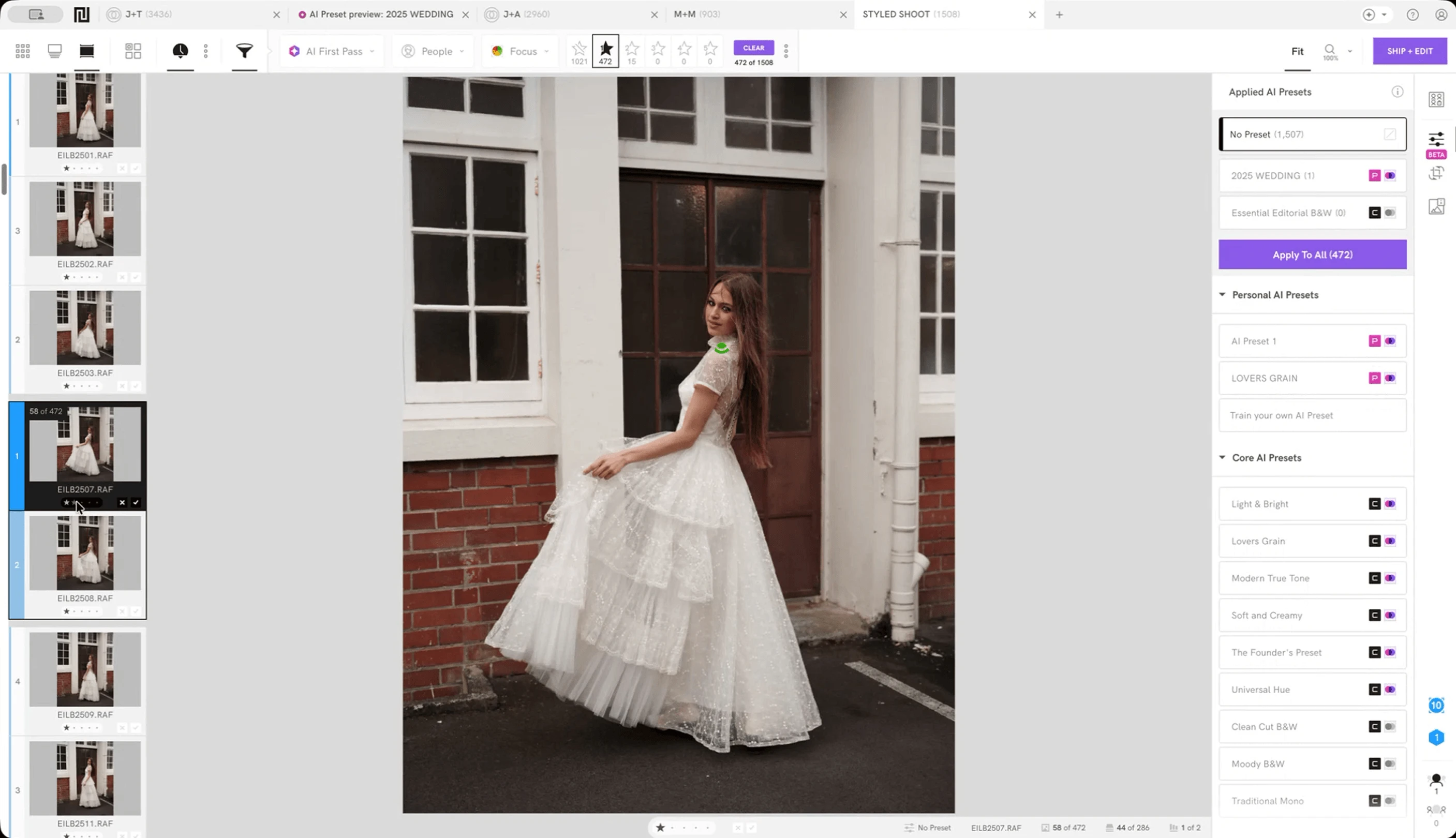
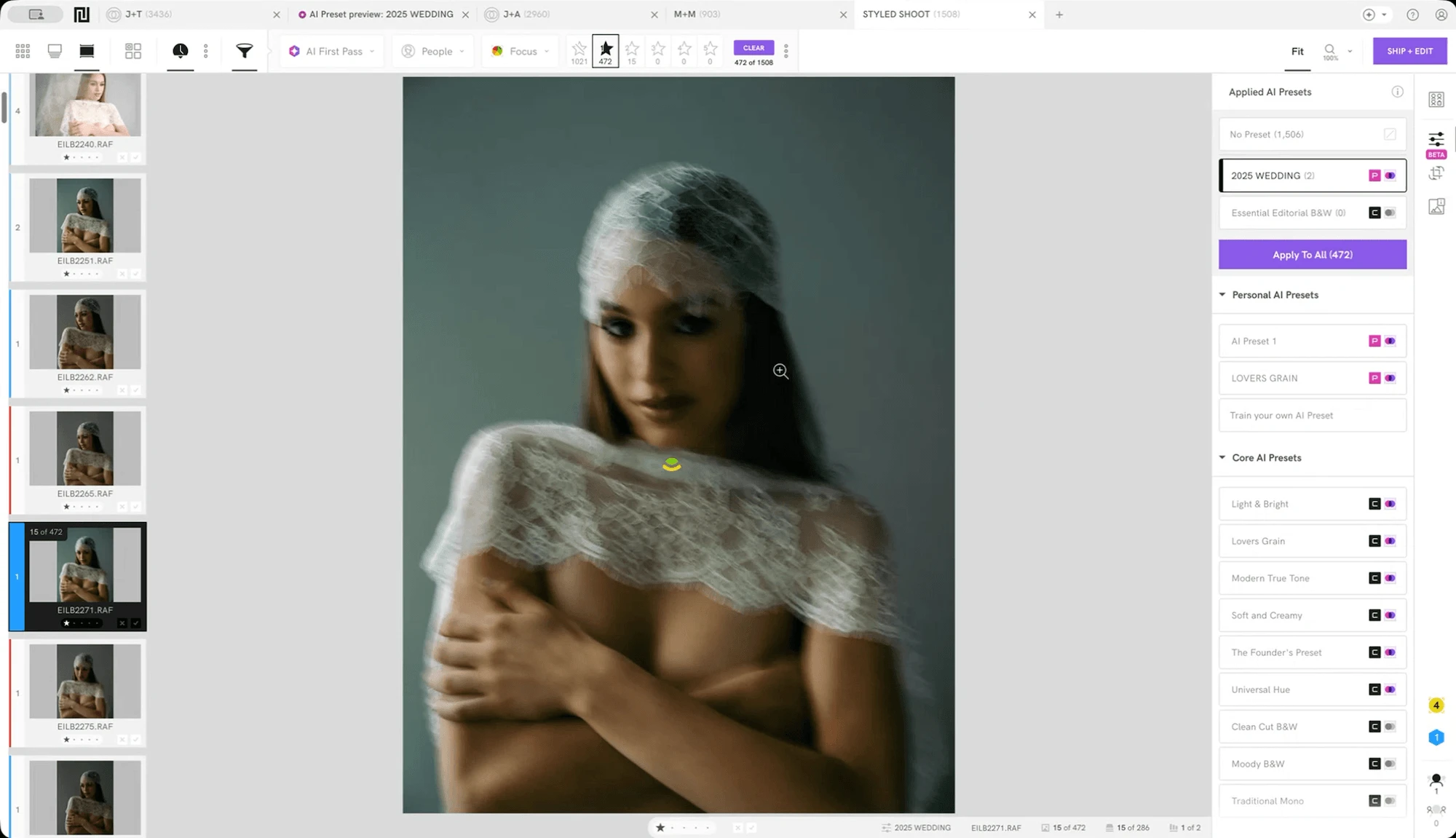
None of this requires new income. It requires treating a payment that lands in July as money that also has to cover December, and building the habits, and the hour or two a week during the slow season, that make that possible. Some of those hours are easier to find than others. Narrative keeps the culling decisions with the photographer while cutting the hours it takes to get through a season's worth of galleries, freeing up more of the slow season for the bookkeeping and business work above instead of a backlog of unedited shoots.
If that backlog is part of what's eating into the slow season, start a free trial of Narrative on its full feature set, no strings attached.
Cover Photo by Leeloo The First.
Content