The Software Stack Every Photographer Needs to Grow Their Business

Elli Kim Content
Tuesday, September 22, 2026
Wedding photographers spend just 4% of their working time actually taking photos. Everything else, post-production, admin, client back-and-forth, eats the week. To scale your photography business, you need the right software stack that declutters the way you run your business.
The right stack changes that math. It's not about shaving a few minutes off individual tasks, it's about freeing up enough time to take on more clients. Here's what that stack looks like in 2026.
In this article
Culling and editing: the real time sink
Client management: keeping the pipeline together
Marketing email: staying visible
Scheduling: removing the back-and-forth
What this stack actually costs
Build the stack that actually grows your business
FAQ: Software and AI tools for growing your photography business
Culling and editing: the real time sink
If you're a professional photographer, chances are that culling and editing take up more of your time than shooting does.
One wedding alone can produce anywhere from 1,000 to 12,000+ RAW files and require several days of culling and editing. A 2026 VSCO survey found that 83% of photographers now use AI tools in their workflow somewhere in that process. It's also the problem we built Narrative to solve.
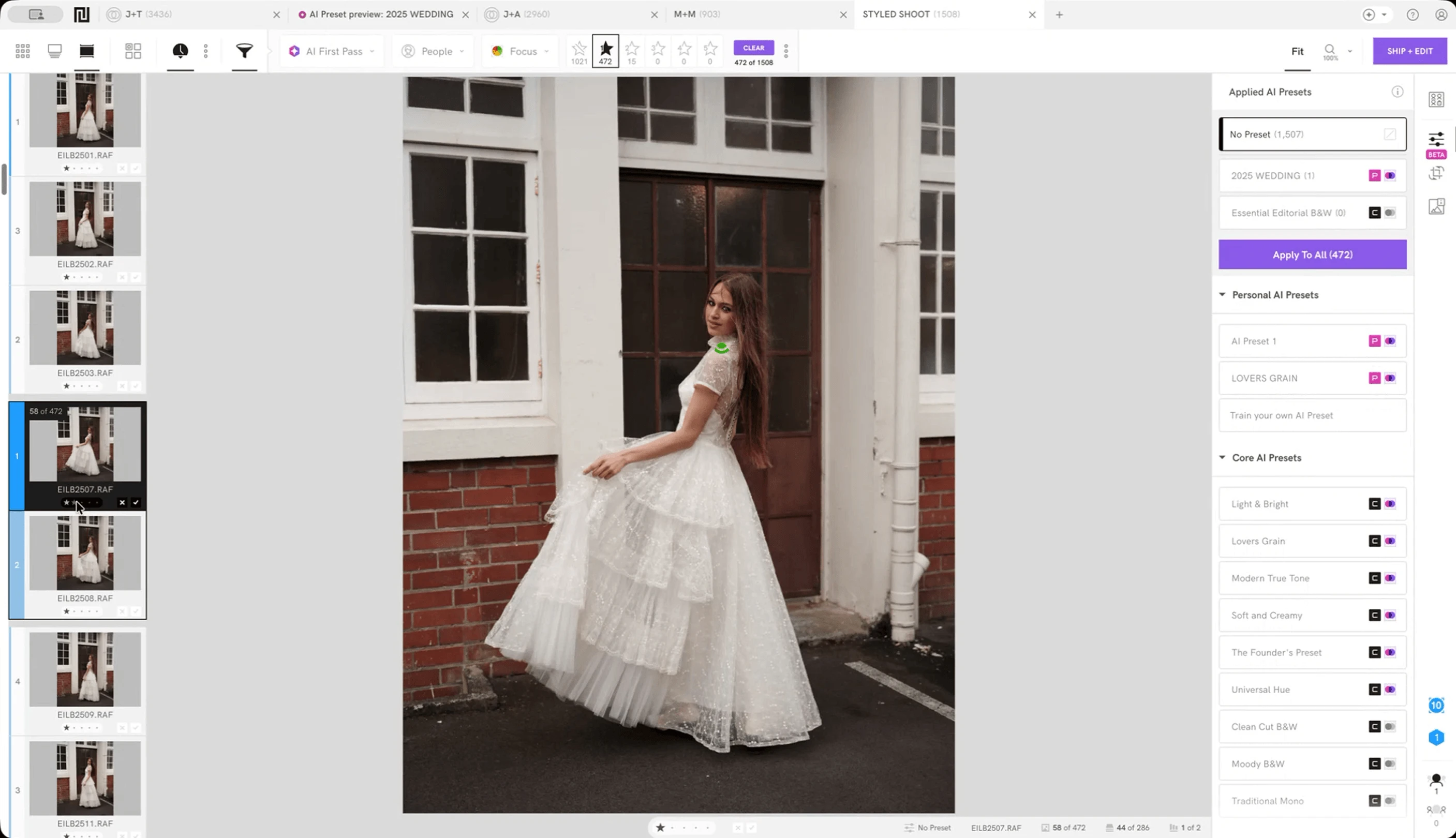
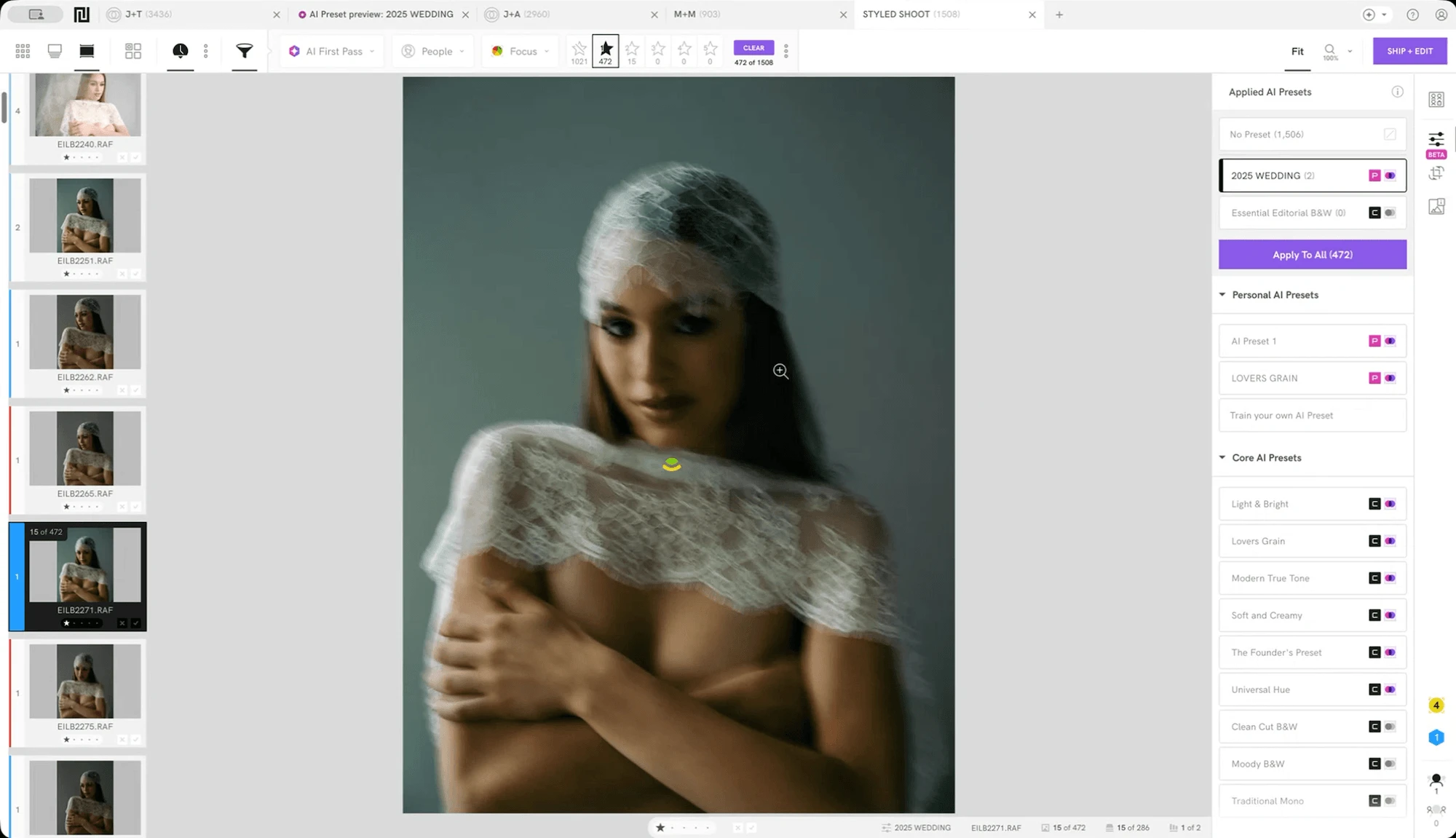
Upon import, Narrative surfaces the best of each burst, so you never start from scratch with a folder of thousands of files. Important faces (or Key Elements) are zoomed in on the Close-ups panel for easier viewing. You can cull by scene, filter by people, and apply crops in batches. When sending your selects to Lightroom, you can pre-edit them in your preferred style (Personal AI Presets, available on Premium and Ultra plans) to reduce manual labor. Everything runs locally on your computer, so you can work offline.
This is an essential stack for any professional photographer because reducing the time spent on each gallery by even half means the difference between turning away inquiries during peak season and accepting them.

Client management: keeping the pipeline together
Once your post-production time drops, the next constraint becomes how well you manage the clients you're now able to take on. Missed follow-ups, slow contract turnaround, and scattered communication cost bookings just as surely as a slow editing workflow costs hours.
This is the job of a CRM built for creative businesses. HoneyBook remains one of the most widely used options, handling inquiries, contracts, invoicing, and scheduling in one pipeline. Dubsado is a more customizable alternative, popular with photographers who want to build out detailed automated workflows for every stage from inquiry to delivery, at the cost of a steeper setup process.
Whichever you choose, the goal is the same: every lead gets a timely response, every contract gets signed without back-and-forth, and you're not relying on memory to track where each client sits in your pipeline.
Marketing email: staying visible
Growth depends on staying in front of past clients and prospects, something that's easy to let slide once you're busy shooting again.
Happy clients often book again. For example, an engagement session can lead to a wedding or anniversary session, or a referral to a friend who is getting married. Email is exactly what keeps you top of mind during the gap between those moments without manual effort.
Email platforms like Flodesk and Kit make it possible to build this once and let it run. A nurture sequence for inquiries who haven't booked yet, an annual check-in to past clients around their event anniversary, a "refer a friend" prompt after a gallery is delivered, all of this runs on autopilot once it's set up.
The time investment is front-loaded: you build the sequence once, and it keeps working through your busiest months without additional effort.
Scheduling: removing the back-and-forth
Email tools like Calendly let prospective clients book consultation calls or session times directly against your real availability, cutting out the email chain that usually precedes a booking.
For photographers running multiple session types, portrait, engagement, full-day weddings, this also means each booking type can have its own duration, buffer time, and questionnaire attached automatically. It's a smaller piece of the stack, but a meaningful one.
What this stack costs
Most tools are priced per month based on an annual subscription and the cost remains the same, even during slow months. There are a couple things you can do to save the cost:
Choose a culling and editing software with all-inclusive plans, so a busier season doesn't come with a bigger invoice.
For admin and marketing, look for bundle plans that include email and scheduling tools with a CRM plan to reduce the overall cost.
However, the way to think about the full stack is to consider the combined monthly cost against the hours and clients it frees up. Pricing a realistic version of this stack* comes to around $110 a month. The average U.S. wedding photography package costs $3,000. Less than half of one extra wedding booking a year covers the entire year of software, before you even count the 8 to 10 hours a week it frees up.
*Narrative on Premium, HoneyBook's Starter plan, Kit's Creator plan, and Calendly's Standard plan
Build the stack that actually grows your business
None of these tools work are a substitute for good work and a strong client experience. What they do is remove the parts of running a photography business that don't require your judgment, so the hours you do have go toward the parts that do: shooting, editing decisions, and client relationships.
If you're deciding where to start, start with culling and editing. It's where the hours are, and it's the one place where saving time compounds directly into capacity for new bookings.
If you want to see what that looks like with your own files, Narrative offers a free trial upon sign up, so you can run it against a real gallery and see the time difference for yourself.
FAQ: Software and AI tools for growing your photography business
What software should photographers use to grow their business? The core stack covers four areas: post-production (culling and editing), client management, marketing (email automation), and scheduling. Narrative is the best photo culling software that streamlines your post-production workflow, so you can minimize repetitive manual tasks and focus on making creative decisions. HoneyBook or Dubsado manage client pipelines; Flodesk or Kit run email marketing; and Calendly handles bookings.
Do I need a CRM if I'm a solo photographer? It helps as soon as missed follow-ups or slow contracts start costing you bookings. A CRM keeps inquiries, contracts, invoicing, and scheduling in one place so nothing falls through during busy seasons.
Is it more efficient to use fully automated, one-click AI culling tools? Not necessarily. You still need to review the AI's choices, identify its mistakes, and save any rejected shots you want to keep. This review and correction process can consume much of the time that automation seemed to save. Narrative surfaces the strongest options, eliminating the need for back-and-forth and allowing you to make the final decision. This ensures speedy delivery without compromising the quality of your work.
Is AI editing software safe to use, or does it replace creative control? Well-designed AI editing tools assist rather than replace your decisions. Narrative's Personal AI Presets (available on Premium and Ultra plans), for example, learn from your own previously edited work and apply your style automatically, but you remain the one making final selections and adjustments.
Content