What Retouching Is Included in Wedding Photography?

Elli Kim Content
Thursday, July 2, 2026
The short answer: editing is always included, retouching usually isn't. Not to the degree some clients expect.
The critical gap is that most couples don't know there's a difference between the two, and most photographers don't explain it clearly enough before the wedding. That gap is where complaints come from.
In This Article
Editing vs Retouching: What's the Difference
What's Typically Included
What's Typically Not Included
Why Clients Expect More Than They'll Get
How to Set the Right Expectation Before the Wedding
Client-Facing FAQs
The Conversation That Prevents the Complaint
Editing vs Retouching: What's the Difference
These two words get used interchangeably by clients, and sometimes by photographers, but they describe very different work.
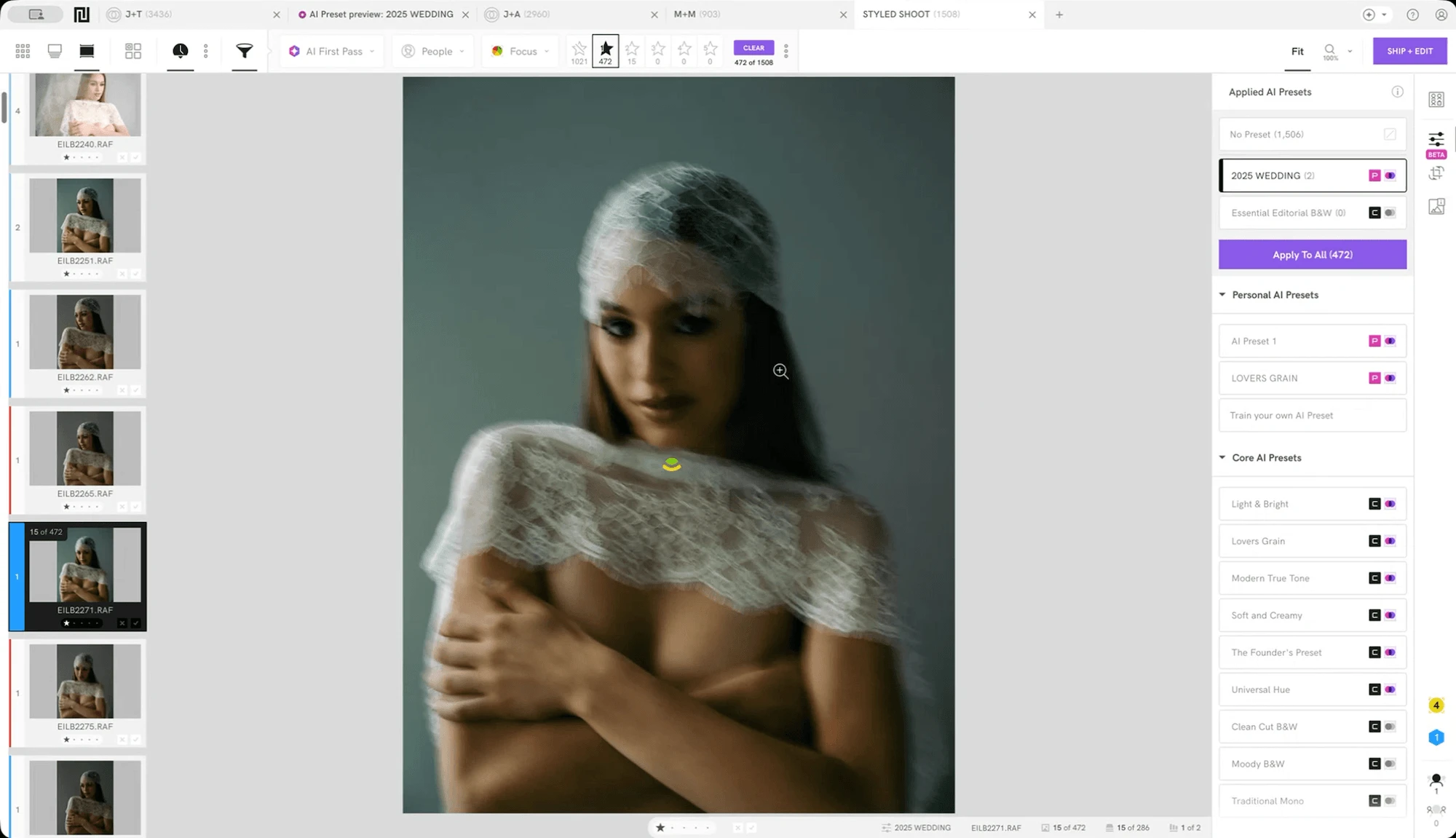
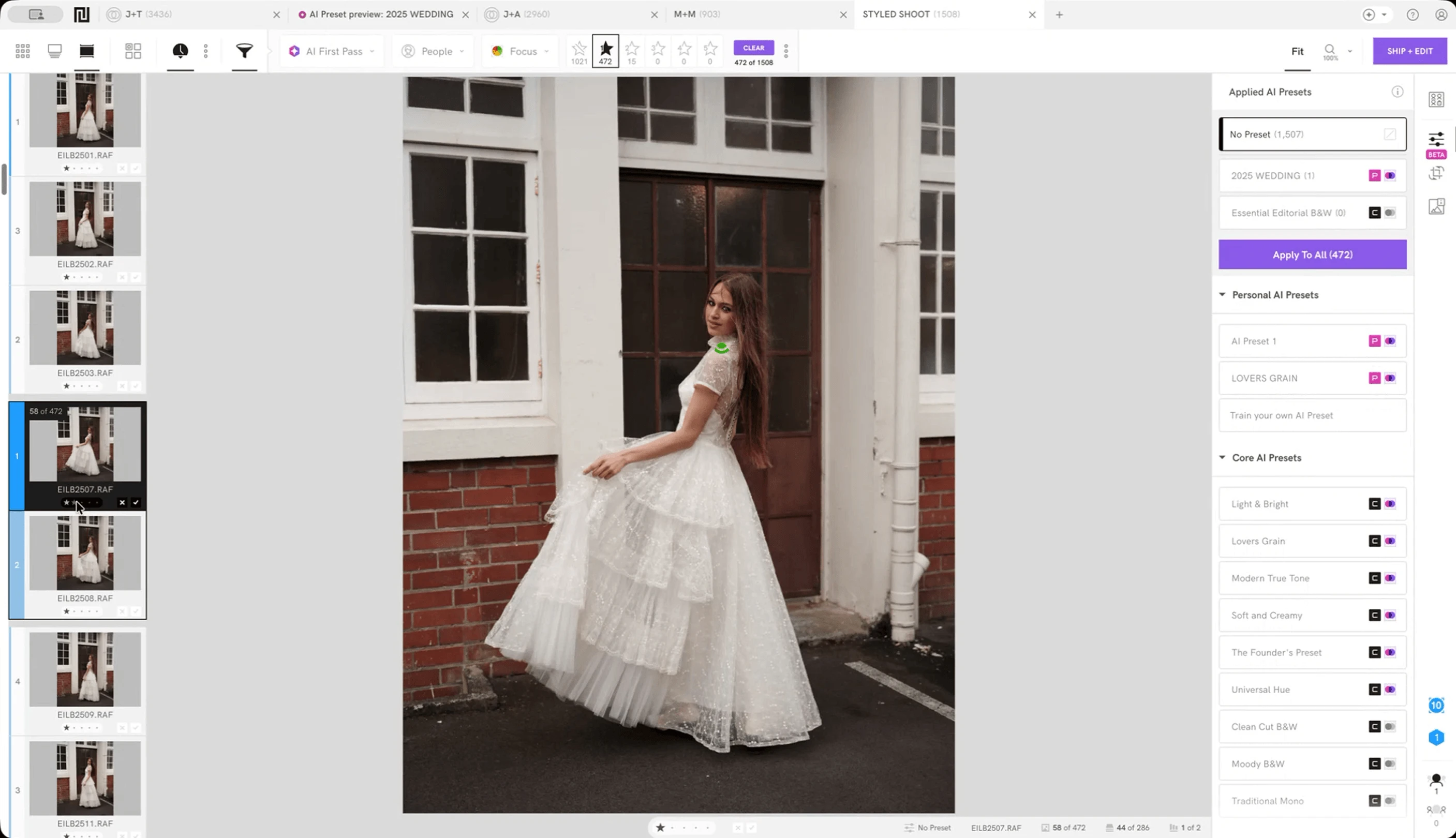
Editing is the global processing applied to every image in the gallery: colour correction, exposure balancing, white balance, contrast, cropping, and consistent tonal grading across the shoot. Every professional photographer does this. It's what makes a gallery look cohesive rather than like a random collection of JPEGs from a camera.
Retouching is individual, image-by-image work in Photoshop or similar software: skin smoothing, blemish removal, flyaway hair, object removal from backgrounds, and yes, body reshaping. This is time-consuming per image and is generally not applied to every photo in a 600-image gallery.
The confusion is understandable. When clients see a finished wedding gallery, they're seeing the result of editing. When they see a fashion campaign or an Instagram highlight reel, they're likely seeing retouching too. The two can look similar, but most clients don't know why one is standard and the other isn't.
What's Typically Included
Standard editing, applied to every delivered image, typically covers:
Colour and tone: White balance correction, exposure adjustments, shadow and highlight recovery, and tonal grading to match the photographer's style. This is what gives a gallery its consistent look and feel across different lighting conditions, from the indoor ceremony to the outdoor portraits to the reception.
Cropping and straightening: Compositional corrections applied during processing.
Basic skin work on hero images: Many photographers apply light blemish removal or skin smoothing to a small selection of key images (the ceremony kiss, the portrait session, the first dance) as part of their standard workflow. Some do it for every delivered image; most don't.
If you're building your package from scratch, this is the baseline. Every image in the gallery gets edited. A subset may get more detailed attention.
What's Typically Not Included
The things clients most commonly expect but that fall outside standard wedding photography:
Body reshaping. Slimming arms, reducing waists, lengthening legs. This is technically possible in Photoshop, but it isn't photography. It's graphic design. Most photographers won't do it as part of a standard package, and many won't do it at all, on the grounds that the finished image should look like the person who was photographed. If it's something a client wants, it needs to be discussed explicitly before the wedding, priced separately, and agreed in writing.
Hair and clothing fixes. Wind-blown hair, visible hair extension clips, creased shirts, a dress hem that caught the light wrong. These can be fixed in post, but doing so across a full gallery is hours of work that isn't priced into a standard package.
Skin smoothing on every image. Light retouching on hero shots is common. Full skin smoothing across every image in a 600-photo gallery is a retouching job, not an editing job, and the pricing should reflect that.
Object removal. Removing a bin bag in the background, a stray guest, a sign. Possible, but outside the scope of standard delivery.
Making someone look younger or significantly different from how they appeared on the day. This comes up more than you'd expect. It's worth being clear in your contract and consultation that your editing preserves how people actually looked, not how they hoped to look.
Why Clients Expect More Than They'll Get
This isn't a client problem. It's an expectations gap driven by what clients see every day.
The photography they consume, across social media, advertising, TV, and film, is almost universally retouched. The images look polished not just because of good lighting and composition, but because of significant post-production work by dedicated retouchers. Most clients have no reason to know this. They see photos and assume that's what professional photography looks like, without knowing anything about the production pipeline behind those images.
Wedding photographers work differently. A solo photographer delivering 500 images from a single day cannot spend the time on each image that a commercial retoucher spends on a single campaign shot. The economics and timelines don't allow for it.
Clients who expect every image to be polished to magazine standards aren't being unreasonable from their own frame of reference. They just have no frame of reference for how that work actually gets done. The conversation that fixes this should happen before the wedding, not after.
How to Set the Right Expectation Before the Wedding
The photographers who avoid retouching complaints tend to do a few things consistently.
Define editing in your contract. Don't use the word "editing" and assume clients know what it means. Write out specifically what's included: colour correction, exposure balancing, tonal grading, and delivery of a fully edited gallery. Be equally explicit about what isn't included: body reshaping, hair and clothing fixes, background object removal.
Show examples in your consultation. When you share portfolio galleries with prospective clients, you're showing them the finished product of your editing style. Make sure they know that what they're seeing represents your standard output, not a carefully selected set of your most retouched work. If there's a gap between the portfolio and what a standard package delivers, they'll feel it.
Give retouching a price. If you're willing to do additional retouching work, price it. Charging per image for detailed Photoshop work signals that it's a separate service with real labour behind it, not something that gets thrown in on request. It also filters out clients whose expectations genuinely can't be met within a standard package.
Mention it in the pre-wedding call. One option worth considering: briefly address it in your consultation. Something like: "My editing covers colour and exposure across every image, and I do light skin work on your portrait session. If there's anything specific you'd like addressed beyond that, let's talk about it now so we can plan for it." It takes 30 seconds and prevents a post-delivery conversation that takes much longer.
Client-Facing FAQs
Here are some questions your clients might ask: Feel free to include them on your website and in your service agreements.
Do all wedding photographers retouch photos?
All professional wedding photographers edit their images: colour correction, exposure, and tonal grading applied to every photo in the gallery. Retouching in the fuller sense (skin work, blemish removal, body reshaping) varies. Some photographers include light retouching on a selection of hero images as standard; most do not apply detailed retouching to every delivered image.
Can my photographer remove a blemish from my wedding photos?
Probably, but it depends on your package. Light blemish removal on portrait images is common and often included. If you have specific concerns, such as a skin condition that's particularly noticeable or a temporary mark from an injury, raise it before the wedding so your photographer can factor it in. Asking after delivery puts both parties in an awkward position.
Will my photographer slim my arms or waist in photos?
Most professional wedding photographers do not include body reshaping as part of a standard package, and many decline to do it at all. The finished image should look like you on your wedding day. If this is something you want, discuss it explicitly during the booking process. Don't assume it's included.
What's the difference between a Lightroom edit and a Photoshop retouch?
Lightroom (and similar tools) handle global adjustments across large volumes of images: colour, exposure, tone. Photoshop is used for detailed, localised work on individual images, such as removing objects, smoothing skin, and fixing clothing. The first scales to 500 images in a workflow; the second doesn't.
How do I know what retouching my photographer includes?
Ask before you book. A clear answer like "I edit every image for colour and exposure, and I do light skin work on the portrait session" tells you exactly what you're getting. If the answer is vague, ask for a specific example from a delivered gallery. Your photography contract should also state what's included and what's available as an add-on.
The Conversation That Prevents the Complaint
Most retouching disputes aren't about what was or wasn't done. They're about expectations that were never set.
Clients aren't unreasonable for wanting to look their best in their wedding photos. Photographers aren't unreasonable for not including hours of Photoshop work in a standard package. The gap between those two positions closes in the booking consultation, not in post-delivery emails.
The photographers who handle this well define it clearly, price it honestly, and have the conversation early. That's the whole system.
💜 Ready to level-up your post-production workflow without cutting your standards? Start Narrative free on Ultra Plan. No credit card required, no strings attached.
Related reading:
-
Cover Photo by Rebeka Lucija Studio
Content